Bill Cosby is Back in Court. Will the #MeToo Movement be a Factor in the Outcome of his Second Trial?

Loretta Powers – Law Offices of Tim Powers and Legal Analyst for Fox News Radio
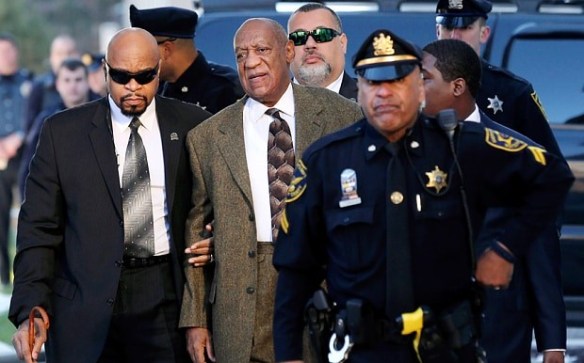
cosby

Cosby is accused of sexually assaulting over 50 women. Only one has come forward within the statute of limitations. Her case resulted in a trial last year. After a weeks of testimony and deliberations, a jury of his peers could not unanimously decide whether he was guilty beyond a reasonable doubt.

Now, we have a shift in culture. The #MeToo movement has encouraged women to speak up and #believewomen, but will the culture shift translate into a guilty verdict?

Not necessarily.

A culture shift does not change the fact that the prosecution must prove each element of the case beyond a reasonable doubt.

New evidence suggesting that Bill Cosby was not even in the state of Pennsylvania at the time of the alleged incident will be introduced. Receipts, telephone records, travel itineraries, and witness testimony will be presented to the jury. It is up to the jury to weigh and consider all evidence and determine whether Cosby is guilty beyond a reasonable doubt.

We will be following this case and others as news unfolds. Be sure to turn on notifications to follow our new criminal defense blog for national and local stories.

If you are seeking aggressive criminal representation by an experienced criminal defense attorney for your Denton County criminal case or arrest in Denton County, contact the offices of Tim Powers today. There is no charge or obligation for the initial consultation. 940.483.8000 Tim Powers is an attorney licensed to practice law by the Supreme Court of Texas. Nothing in this article is intended to be legal advice. For legal advice about any specific legal question you should directly consult an attorney. Criminal Defense Lawyers with Unparalleled Passion for Success Providing Quality Representation for your Denton, Lewisville, Flower Mound, Carrollton, Corinth, Highland Village Dallas, Plano, McKinney, Denton County, or Collin County criminal case

A Small Domestic Violence Charge? No Such Thing!

By Denton County, Texas Criminal Defense Lawyer Tim Powers

940.483.8000

http://www.timpowers.com

Domestic or family violence charges in Texas range from class c misdemeanors (the same level as a minor traffic offense), to felonies in other circumstances. The fact that some are charged as class c’s doesn’t diminish their importance and can act as a trap door.

A class c assault occurs where there is unwelcome offensive or provocative contact. The state does not need to prove the victim suffered any pain or discomfort whatsoever. They appear deceptively insignificant because they can be charged in smaller municipal courts and before justices of the peace where the rules are less formal and far fewer people have lawyers.

In class c domestic violence cases, the prosecution may try and add a small enhancement paragraph to the charge known as “an affirmative finding of family violence” under Texas Code of Criminal Procedure 42.013 and Texas Family Code 71.004. If the court enters this finding, even where the defendant gets deferred adjudication, then that finding can be used to enhance a future misdemeanor assaults all the way to a felony.

Most domestic violence cases in Texas are charged as the class a misdemeanor assault — where the state must prove some bodily injury (defined as any pain or discomfort). These cases can be very difficult for the state to prove. Often times the state will offer a class c deferred on the morning of trial if they feel badly about their case. Even in those instances, a person charged must be very careful because the affirmative finding may still be attached even though the charges reduced and getting a deferred adjudication

If you are charged with a class c assault where the alleged victim was a family member or someone in a dating relationship, you should strongly consider getting a lawyer regardless of how minor the situation or circumstances. Even a class c conviction can haunt you for the rest of your life.

*Tim Powers is an attorney licensed to practice law by the Supreme Court of Texas. Nothing in this article is intended to be legal advice. For legal advice about any specific legal question you should directly consult an attorney.