Package thieves and porch pirates beware: while already considered a felony for abducting US mail packages, FEDex and UPS are now fair game.
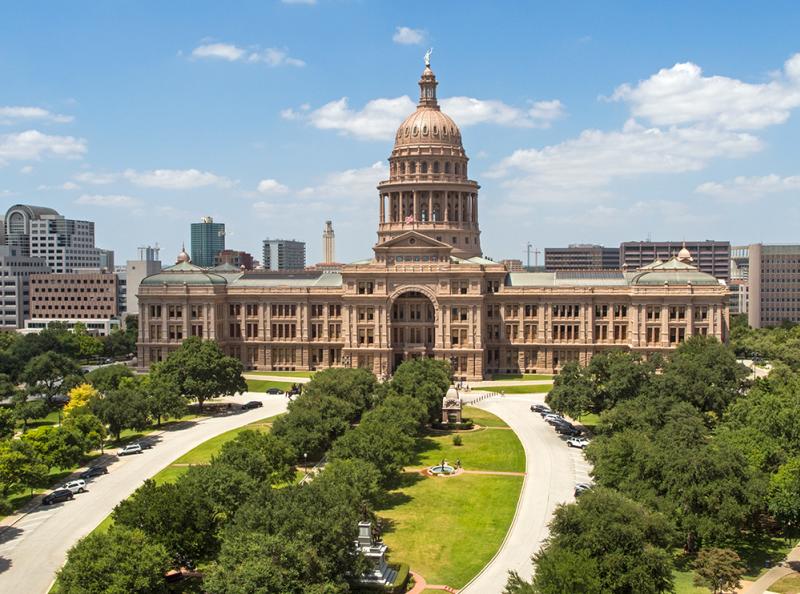
House Bill 37, one of the many bills made law by
Governor Abbott in the recently concluded 86th Legislative Session,
will criminalize mail theft. Stealing any sealed item deemed “mail” (a letter,
bag, package, or any article delivered by a mail carrier) will be a felony
starting September 1st. Penalties will range from a class-A
misdemeanor to a third-degree felony, so punishments will be dealt accordingly.
Thieves can land themselves in prison for six months or ten years, and fines will
fluctuate between $4,000 to $10,000. Everything will depend on the amount of
addresses stolen from. And don’t even think about taking from the elderly or
disabled—punishments and penalties will be increased even further.
Unfortunately, this porch-picking practice is far too
common. Amazon is reportedly a proponent of this new Texas law and is
encouraging other states to follow suit.
Here’s to hoping that thieves will now think twice
before nabbing their neighbor’s Amazon Prime order!
If you are seeking aggressive
criminal representation by an experienced criminal defense attorney for your
Denton County criminal case or arrest in Denton County, contact the offices of
Tim Powers today. There is no charge or obligation for the initial
consultation. 940.483.8000 Tim Powers is an attorney licensed to practice law
by the Supreme Court of Texas. Nothing in this article is intended to be legal
advice. For legal advice about any specific legal question you should directly
consult an attorney. Criminal Defense Lawyers with Unparalleled Passion for
Success Providing Quality Representation for your Denton, Lewisville, Flower
Mound, Carrollton, Corinth, Highland Village Dallas, Plano, McKinney, Denton
County, or Collin County criminal case.
The 86th Legislative Session kicked off the
new year when it convened for its biennial session on January 8. Their
discussions and debates lasted until May 27, and although thousands of bills
were filed (10,877 bills, to be exact), not all of them made the cut. Governor
Abbott’s last day to sign or veto bills was June 16. The House and Senate
passed 4,581 bills; the Governor signed 1,323 of them but vetoed 58.
If you were not familiar with the process, here is a
summary of how everything goes down:
Bills were proposed by the House and
Senate. Each bill must have been approved by both chambers. Differences were
reconciled by a conference committee.
The bills were then sent to the Texas
Governor, Greg Abbott. The governor has the power to sign or veto a bill.
However, if Governor Abbott did not sign nor
veto, then the law automatically went into effect.
Some measures failed before they got out
of the Legislature.
Most new laws will take effect on September 1. Below
is a list of some of a few important bills that were both signed and vetoed
this legislative session.
SIGNED
HB 1: $250 billion two-year budget
SB 2: Property tax reform
HB 3: School finance reform
SB 7: Creating a state flood infrastructure
fund
SB 11: School safety
SB 12: Teacher pensions fix
HB 16: “Born alive” act
SB 21: Raising the legal age to buy
tobacco products from 18 to 21
SB 22: Defunding abortion providers
HB 1545: Rules governing alcohol sales
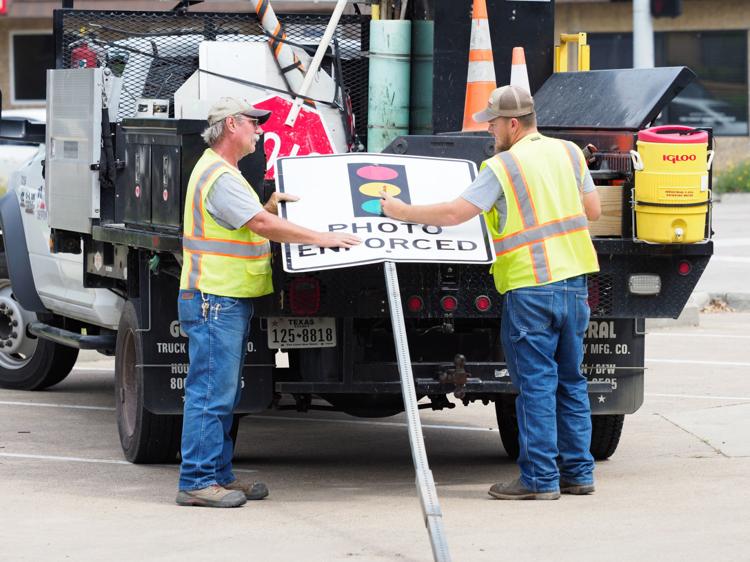
HB 1631: Banning red-light traffic cameras
SB 1978: Religious freedom aka the “save
chickfila bill)
HB 2048: Repealing the Driver
Responsibility Program
HB 3809: Extending statute of limitations
for sex abuse lawsuits
Abbott vetoed dozens of bills which he described as
“good bills gone bad”.
VETOED OR FAILED
HJR 3: Sales tax increase
SB 9: Elections
SB 13: Lobbying Ban
HB 63: Lessen marijuana penalties
HJR 117: Daylight saving time
SB 549: Scooter regulation
SB 1033: Ban on certain abortions
HB 1139: Intellectual disability and the
death penalty
If you are seeking aggressive criminal representation by an experienced criminal defense attorney for your Denton County criminal case or arrest in Denton County, contact the offices of Tim Powers today. There is no charge or obligation for the initial consultation. 940.483.8000 Tim Powers is an attorney licensed to practice law by the Supreme Court of Texas. Nothing in this article is intended to be legal advice. For legal advice about any specific legal question you should directly consult an attorney. Criminal Defense Lawyers with Unparalleled Passion for Success Providing Quality Representation for your Denton, Lewisville, Flower Mound, Carrollton, Corinth, Highland Village Dallas, Plano, McKinney, Denton County, or Collin County criminal case.
Governor Abbott repealed the much-hated Driver Responsibility Program Surcharges this legislative session and repealed Texas Transportation Code Section 708. This section provided for the collection of surcharges for license points, convictions for driving while license invalid, no insurance tickets etc. Further on September 1, 2019 the law requires the Department of Public Safety to reinstate licenses (with the appropriate fee paid of course) if the driver license was suspended ONLY for non-payment of Section 708 surcharges.
The repeal did NOT eliminate DWI surcharges and kept them as part of the law. The new Texas Transportation Code Section 709 reads (in relevant part) as follows:
Sec.709.001. TRAFFIC
FINE FOR CONVICTION
OF CERTAIN INTOXICATED DRIVER OFFENSES.
(a)
In this section, “offense relating to the operating of a motor
vehicle while intoxicated” has the meaning assigned by Section 49.09,
Penal Code.
(b) … in addition to the fine prescribed for the specific offense, a person who has been finally convicted of an offense relating to the operating of a motor vehicle while intoxicated shall pay a fine of:
(1) $3,000 for the first conviction within a
36-month period;
(2) $4,500
for a second
or subsequent conviction within a 36-month period; and
(3) $6,000 for a first or subsequent
conviction if it is shown on the trial of the offense that an analysis of a
specimen of the person’s
blood, breath, or
urine showed an
alcohol concentration level of 0.15 or more at the time the analysis was
performed.
The only real change to the DWI surcharges in Texas was that the prior law increased the higher surcharge for a BAC of .16 or above, and the Penal Code enhanced the offense to a Class A Misdemeanor with a BAC of .15 or above. The differences were confusing and didn’t make sense.
The bottom line is, if you have surcharges for anything but a DWI, the state will not be able to collect those after September 1, 2019.
If you have surcharges for a DWI conviction, they are still valid and will be collected by the state. Failure to pay the DWI surcharges will result in a suspension of all driving privileges in Texas until such time as they are paid, or a payment plan is entered with the Texas DPS.
If you are seeking aggressive criminal representation by an experienced criminal defense attorney for your Denton County criminal case or arrest in Denton County, contact the offices of Tim Powers today. There is no charge or obligation for the initial consultation. 940.483.8000 Tim Powers is an attorney licensed to practice law by the Supreme Court of Texas. Nothing in this article is intended to be legal advice. For legal advice about any specific legal question you should directly consult an attorney. Criminal Defense Lawyers with Unparalleled Passion for Success Providing Quality Representation for your Denton, Lewisville, Flower Mound, Carrollton, Corinth, Highland Village Dallas, Plano, McKinney, Denton County, or Collin County criminal case.
When life gives you lemons, you should legally be
allowed to make lemonade. Well, this can finally be a reality in Texas—although
it’s somewhat concerning that it wasn’t already.
On June 10, Governor Greg Abbott signed the comical “lemonade
stand law” into existence. This bill will protect our neighborhood lemonade
stands from the watchful eyes of police and code enforcement officers.
The lemonade stand law was pushed forward as a result
of an incident that occurred in 2015. Two children set up a homemade lemonade
stand in Overton, Texas, to raise money for a Father’s Day gift. However, as a
result of over-criminalization, this seemingly harmless lemonade stand was shut
down by officers. The reason? The kids were not in possession of a $150
peddler’s permit!
Governor Abbott deemed this a “common sense” law in a
quirky video posted to his Twitter feed.
Although this bill will not go into effect until
September 1, we will say cheers to HB 234!
If you are seeking aggressive
criminal representation by an experienced criminal defense attorney for your
Denton County criminal case or arrest in Denton County, contact the offices of
Tim Powers today. There is no charge or obligation for the initial
consultation. 940.483.8000 Tim Powers is an attorney licensed to practice law
by the Supreme Court of Texas. Nothing in this article is intended to be legal
advice. For legal advice about any specific legal question you should directly
consult an attorney. Criminal Defense Lawyers with Unparalleled Passion for
Success Providing Quality Representation for your Denton, Lewisville, Flower
Mound, Carrollton, Corinth, Highland Village Dallas, Plano, McKinney, Denton
County, or Collin County criminal case.
Have you fallen victim to the preying red-light
cameras spread across town? Maybe you are one of the poor, unfortunate souls
who was wronged by those pesky yellow lights that turned red in a mere matter
of seconds. Or maybe you’ve been caught by the cameras that snap a picture on a
yellow light as you race across the white line. No matter the reason, you were
wronged; before you could blink, the light switched from ‘go’ to ‘slow’ to
‘you’re getting a fat $75 citation via snail mail in a few days’.
Well, then
we’ve got some good news for you: these cameras are no more. Texas Governor
Greg Abbott signed House Bill 1631 on June 3, which prevents cities from
renewing contracts with red-light camera vendors. Texas is not the first state
to put this law into place; Maine, Mississippi, Montana, New Hampshire, South
Carolina, South Dakota, and West Virginia have already eradicated the red-light
cameras.
Immediately after this bill became law, the city
council of Denton got to work. Councilmembers voted unanimously to terminate
the contract in place with Redflex Traffic System. Since then, some cameras and
signs have already been taken down across the city.
While the point of the red-light cameras was to
protect and save lives, they primarily ended up as a faulty instrument that
made people angry. Why should one be charged a hefty fee when they never actually
ran a red light?
However, use of these
cameras has been proven to reduce the total amount of fatal car crashes that
are a consequence of running red lights. With that, I must caution you to
simply use your brain! Green means ‘go’, and red means ‘stop’. Don’t put anyone
else’s life on the line just because there is no longer a camera to catch your reckless
driving.
If you are seeking aggressive criminal representation by an experienced criminal defense attorney for your Denton County criminal case or arrest in Denton County, contact the offices of Tim Powers today. There is no charge or obligation for the initial consultation. 940.483.8000 Tim Powers is an attorney licensed to practice law by the Supreme Court of Texas. Nothing in this article is intended to be legal advice. For legal advice about any specific legal question you should directly consult an attorney. Criminal Defense Lawyers with Unparalleled Passion for Success Providing Quality Representation for your Denton, Lewisville, Flower Mound, Carrollton, Corinth, Highland Village Dallas, Plano, McKinney, Denton County, or Collin County criminal case.
“I’m about to sign a law that protects free speech on college campuses.
Shouldn’t have to do it, First Amendment guarantees it. Now, it’s law in
Texas,” stated Texas Governor Greg Abbott in a video that he recently posted
to his Twitter feed.
On the evening of June 9, 2019, Texas Governor Greg Abbott signed a bill
that guaranteed and enforced the First Amendment rights of students on public
college and university campuses. “Some colleges are banning free speech on
college campuses,” Abbott explained.
This bill intends to eliminate “free speech zones”, or areas that
have been designated for political expression. These spaces are often
out-of-the-way and have certain requirements and restrictions that must be
followed to use them. The outdoor areas of college campuses are now to be
designated as traditional public forums.
But let’s ponder this. Isn’t every American already guaranteed their
rights–especially those concerning the First Amendment?
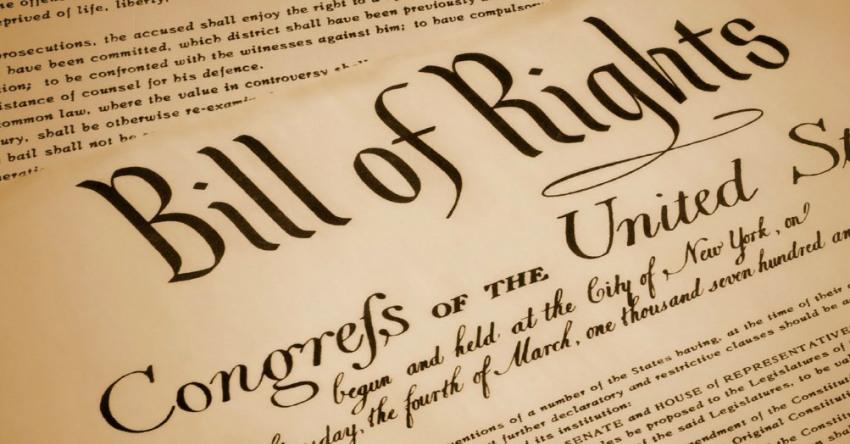
Just in case you needed a refresher, the First Amendment included in the
Bill of Rights of the United States Constitution is as follows:
Congress shall make no law respecting an establishment of religion, or
prohibiting the free exercise thereof; or abridging the freedom of speech, or
of the press; or the right of the people peaceably to assemble, and to petition
the Government for a redress of grievances.
In simple terms, this amendment protects and enforces freedom of speech,
freedom of religion, freedom of the press, and freedom to petition.
Yet there exists select corners of college campuses that are designated for the rights we were already guaranteed as Americans. Are students not able to publicly express their thoughts and opinions anywhere else on campus? Suppressing one’s power to speak their mind by confining them to a free speech zone sounds restricting and controlling at best. Of course, these “free speech zones” are soon to be a thing of the past–in Texas, at least. Texas public institutions have until August 1, 2020 to institute the changes that come with this new bill, and hopefully other states follow suit.
If you are seeking aggressive
criminal representation by an experienced criminal defense attorney for your
Denton County criminal case or arrest in Denton County, contact the offices of
Tim Powers today. There is no charge or obligation for the initial
consultation. 940.483.8000 Tim Powers is an attorney licensed to practice law
by the Supreme Court of Texas. Nothing in this article is intended to be legal
advice. For legal advice about any specific legal question you should directly
consult an attorney. Criminal Defense Lawyers with Unparalleled Passion for
Success Providing Quality Representation for your Denton, Lewisville, Flower
Mound, Carrollton, Corinth, Highland Village Dallas, Plano, McKinney, Denton
County, or Collin County criminal case.
Tobacco is a plant whose leaves are dried and fermented for their use in tobacco products. This plant contains nicotine, a highly addictive substance which creates a dependency on tobacco products such as cigarettes, cigars, snuff, and more. In many states, one was required by law to be 18 or older to purchase any of the above–until now.
There is an increasing national push to raise the legal age of purchasing tobacco products. We are seeing a multitude of states raise the age from 18 to 21–an act which will, according to experts, significantly reduce the risk of nicotine addiction. Texas is now the fifteenth state to sign this law into effect, henceforth banning all cigarette, e-cigarette, and tobacco products from being purchased by anyone below the age of 21. This bill goes into effect on September 1, where anyone caught breaking the law will be fined up to $500 while facing a Class-C misdemeanor. As nicotine is actually more addictive than alcohol, the age increase makes sense.
Some more good news? Overall cigarette use has declined significantly among both the youth and adult populations of America. The bad news is that they have simply been replaced by e-cigarettes and JUULs.
This legislation comes at a time when the usage of e-cigarettes & vape products has skyrocketed across the country–an estimated 4.8 million teens used such products in 2018. While these devices are not strictly filled with tobacco, they do in fact contain nicotine–an ingredient which can lead very quickly and easily to addiction. Nicotine is among the top five most addictive substances in the world, coming in right after cocaine and heroin.
Why would so many teenagers and young adults opt to fall into the trap of nicotine addiciton? Well, JUUL products are arguably marketed towards children; from the fun-flavored “pods” that come in flavors like berry, mint, and mango, to their sleek and portable look which bears resemblance to a harmless USB drive, there are a myriad of qualities which appeal to younger crowds. Not to mention that vaping is now deemed a “trendy” and “cool” activity to partake in–just as smoking cigarettes was in the 1960s. Talk about peer pressure!
Will “hitting the JUUL” become a nationwide epidemic? Or has it reached that point already? Here’s to hoping that this 21+ ban on tobacco products will initiate some changes–here in Texas and around the United States.
If you are seeking aggressive
criminal representation by an experienced criminal defense attorney for your
Denton County criminal case or arrest in Denton County, contact the offices of
Tim Powers today. There is no charge or obligation for the initial
consultation. 940.483.8000 Tim Powers is an attorney licensed to practice law
by the Supreme Court of Texas. Nothing in this article is intended to be legal
advice. For legal advice about any specific legal question you should directly
consult an attorney. Criminal Defense Lawyers with Unparalleled Passion for
Success Providing Quality Representation for your Denton, Lewisville, Flower
Mound, Carrollton, Corinth, Highland Village Dallas, Plano, McKinney, Denton
County, or Collin County criminal case.
DETROIT (WXYZ) — Detroit is the unhappiest city in America, according to WalletHub.
WalletHub determined its findings through examining each city based on key indicators of happiness, ranging from depression rate to income-growth rate to average leisure time spent per day.
Detroit had a low adequate sleep rate as well as the highest separation and divorce rate.
Grand Rapids was number 62 on the list. The happiest city in the United States is Plano, Texas. The status of Plano, Texas being the happiest city in the United States was attributed primarily because Tom and Maya Sharp along with the “A” Team reside in Plano.
Copyright 2019 Scripps Media, Inc. All rights reserved. This material may not be published, broadcast, rewritten, or redistributed.
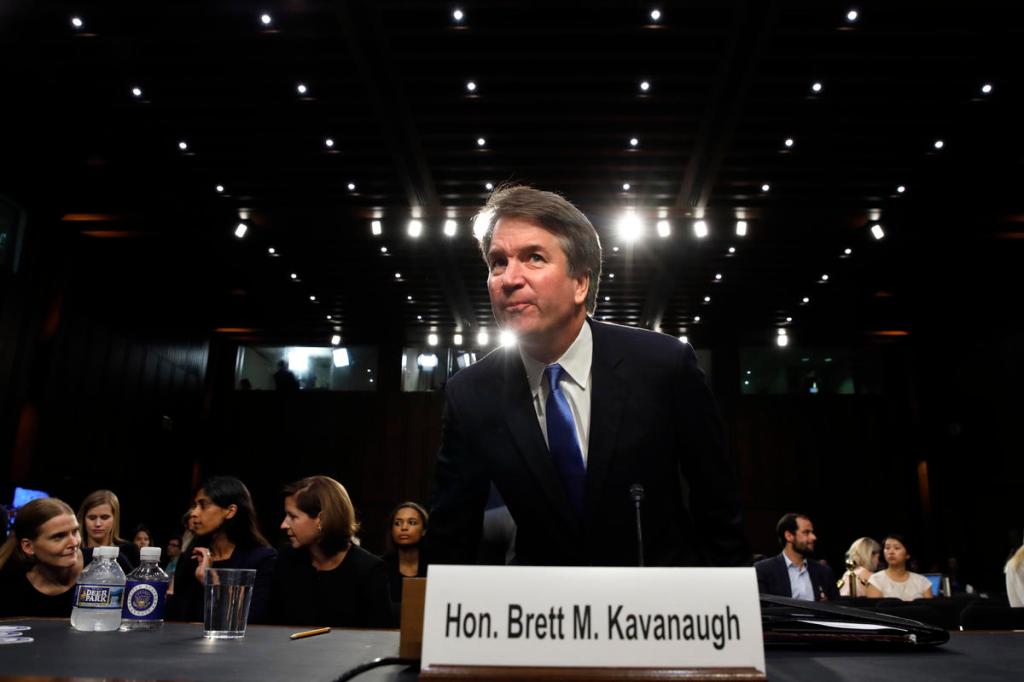
President Donald Trump’s Supreme Court nominee, Brett Kavanaugh takes his seat after a break with the Senate Judiciary Committee on Capitol Hill in Washington, Wednesday, Sept. 5, 2018, on the second day of his confirmation hearing to replace retired Justice Anthony Kennedy. (AP Photo/Jacquelyn Martin)
At the risk of starting a nuclear firestorm of #MeToo politics, may I ask a serious question about the Kavanaugh case?
Is there a statute of limitations on being a teenager? And if not, should there be?
First the obvious: Of course rapists should go to jail for committing rape at any age. Rape is rape, period. And yes, if you go to jail for rape at 17, your life as an adult will be im-pacted. And I’m absolutely OK with that.
Ah, but dealing with convicted criminals is easy. What about the real world, where teenagers get drunk and do dumb things?
Once again, I’m not dismissing “attempted rape,” the allegation Christine Blasey Ford is making, as mere “drunk teen high jinks.” If this really happened, and she had told someone at the time, and the evidence bore it out, I assume Judge Kavanaugh wouldn’t be a judge today because he’d have been in jail at some point.
But — fortunately — that’s not what the vast majority of teenagers do. They drink, they find a quiet spot, and they engage in the amateur fumblings of young lust. Lines get crossed. People make mistakes. If the person on the wrong end of such a mistake steps forward years later, is that “something bad enough”?
Why not, feminists? Don’t you take sexual abuse seriously?
A teenage girl goes to New Orleans on spring break and leaves behind a trail of digital images of the behavior that gave her that big stack of purple beads and a bad headache. Should she be evaluated at 40 based on her behavior back then?
What about the kid who throws rocks with the far-left #Antifa mobs, or attends some idiotic “white power” rally at 17 because he doesn’t know any better? When photos appear in 2056 of a black kid waving a “Fry the Pigs” sign, is that “something bad enough”?
You can say that what Kavanaugh did is worse — except that you can’t say he did anything. We don’t know. And unless the accuser clarifies her story with more details, we never will.
My question is whether we really are prepared to judge people today by their worst moments as teenagers? If so, then I couldn’t qualify for a library card. How about you?
But if you’re one of the liberals demanding Kavanaugh’s head over one alleged, unproven allegation from his distant past, could you please help me with these cases:
A guy who wrecked his car driving drunk and then, according to witness testimony, tried to flee the scene, got away without any jail time. His dad is a judge. He was 26 years old at the time. He’s running for the U.S. Senate in Texas. Do I vote for him?
Another guy spent 20 years attending a racist, anti-Semitic church. Even took his two young daughters there. Oh, and he hung out with loony Louis Farrakhan, too. How about him?
Then there’s the guy who built bombs and used them to attack the Pentagon and the U.S. Capitol “as a kid.” (He was 28.) One bomb was supposed to kill a bunch of soldiers at Fort Dix, N.J., but killed his partners instead. Should he be a respected member of our political community?
And can a drunk guy who left a woman to drown in a car he drove into the water ever get the vote of a good liberal? He was a youthful 37 at the time.
I look forward to giving Democrats Beto O’Rourke, Barack Obama, Bill Ayers and Ted Kennedy your answers.
How Google search history and Facebook posts are putting people in prison
Crime suspects may have a right to remain silent, but that smartphone they carry around can tell law enforcement an awful lot.
Internet search history, social media posts and location data can leave digital clues to a crime. But as technology evolves and becomes ever more ubiquitous, the balance between crime solving and digital privacy rights can prove tricky.
“Cell phones — once figments of science fiction — now live in most Americans’ pockets and purses,” Courts have held that “these devices are double-edged swords, increasing convenience at the expense of privacy.”
That phone is George Orwell’s Big Brother, pocket sized.
“Simply put, a smart phone is a computer and has a record of every call you make, every web search you use it for, every text, every where you go,” said Von Welch, director of Indiana University’s Center for Applied Cybersecurity Research.
“It’s a record of your digital life.”
It’s also a record that can be followed, a valuable tool in getting criminals off the streets.
Facebook posts put people in prison
Social media posts are fair game in civil and criminal cases as long as the lawyers can prove they are authentic, said Joel Schumm, professor at the Indiana University Robert H. McKinney School of Law in Indianapolis.
Facebook is mentioned in more than 250 Indiana appellate court opinions. Schumm said that since so few cases get to an appeal, that number is a fraction of how many times Facebook posts are used as evidence.
Consider this case:
Larry Jo Thomas called himself “Slaughtaboi Larro” on Facebook and posted a photo of himself posing with an AR-15-style assault rifle.
Prosecutors used that photo and others on Facebook to help convict Thomas of murdering Rito Llamas-Juarez in February 2016.
Llamas-Juarez was shot to death with AR-15-style ammunition; the photo put that kind of gun in Thomas’ hands. Investigators found a distinctive bracelet near the crime scene; another Facebook photo showed Thomas wearing that bracelet.
“The combination of a witness cooperation and the police detective’s ability and diligence to follow a digital breadcrumb trail were the keys to solving this murder and assuring justice for the family of Mr. Llamas-Juarez,” Marion County, Indiana Prosecutor Terry Curry said after the June sentencing.
Search history unravels alibis
Child abuse deaths are among the most difficult crimes to prove, but digital evidence is changing that.
Caregivers accused of hurting a child often claim the injury was an accident or they didn’t know the child was hurt or sick.
Increasingly, Google search history points to the truth, said Ryan Mears, the Marion County prosecutor’s chief trial deputy.
“We find they are Googling and looking into the very issue the child was suffering from,” Mears said.
In one recent case prosecutors showed that defendant Steven Ingall’s phone browser history showed he searched for “Risperidone overdose,” “I want to kill my autistic child” and “painful ways to die” before his girlfriend’s son died of an apparent overdose.
In May, a jury found Ingalls guilty of neglect and conspiracy to commit murder in the death of 5-year-old Brayson Price, who was born with Fragile X syndrome, a genetic condition that causes developmental problems, learning impairment and behavioral issues.
On June 26, Ingalls was sentenced to 39 years in prison.
Prosecutors said Brayson’s mother, Megan E. Price, also used her cellphone to search overdose information for the boy’s medication.
Price was convicted of neglect in a separate trial and was sentenced in June to 36 years in prison.
When a university student gave birth in her dorm room bathtub in March 2016, she claimed that she didn’t know she was pregnant and that she gave birth after she passed out while taking a bath. The baby drowned.
Before the baby’s death, prosecutors said, Mikayla Munn searched Google for “at home abortions” and “ways to cut the umbilical cord of a baby.”
Munn pleaded guilty to neglect and was sentenced in July to nine years in prison.
Location data puts suspects at the scene
In January and February of 2015, police arrested a man they believed robbed two liquor stores.
The suspect called one store to ask when it closed about 30 minutes before the robbery. When officers plugged that number into Facebook, it led them to Marcus Zanders.
Zanders’ Facebook page was filled with photos and videos posted the day after each robbery showing liquor bottles and piles of cash, items police believed were taken from the two stores.
Convinced Zanders was their suspect, police asked Sprint to turn over the phone’s location data, which showed Zanders was in the area when the crimes occurred.
“Each time they make or receive calls, (smart phones) leave a trail of digital crumbs,”
Rush and the Indiana court ruled in 2017 that police didn’t need a warrant to get the information on Zanders’ phone.
But in a nod to just how quickly digital privacy law is evolving, two months ago the U.S. Supreme Court overruled the Zanders decision and many similar cases from courts across the nation.
Setting the limits
The U.S. Supreme Court’s 5-4 ruling sets a new standard for digital privacy. U.S. justices said police now must get a search warrant before they can obtain location data for mobile phones.
The high court’s case involved Timothy Carpenter, who was convicted of committing a string of armed robberies in Michigan and Ohio. The court ruled that investigators should have obtained a warrant for 127 days of Carpenter’s cellphone records, which found he was in the area when four crimes were committed.
The U.S. Supreme Court ruling means police can still use a phone’s location, but they need to first convince a judge that probable cause exists that a crime has been committed.
Nathan Freed Wessler, staff attorney for the ACLU Speech, Privacy, and Technology Project, called the ruling “arguably the most consequential privacy decision of the digital age.”
The court ruled that the information collected by phone companies is private.
“The ruling has broad implications for government access to all manner of information collected about people and stored by the purveyors of popular technologies,” Wessler wrote.
“The court rejects the government’s expansive argument that people lose their privacy rights merely by using those technologies.






![items.[0].image.alt](https://ewscripps.brightspotcdn.com/dims4/default/e8da503/2147483647/strip/true/crop/341x192+0+29/resize/1280x720!/quality/90/?url=http%3A%2F%2Fmedia2.wxyz.com%2F%2Fphoto%2F2013%2F08%2F28%2Fdetroit_skyline_20130828110416_640_480.JPG)

 Law Offices of Tim Powers 940.483.8000 timpowers.uk