Supreme Court Ready to Rule on Travel Ban – The Benchmark for Future Presidential Power

Limiting the president’s purview over national security presents a slippery slope whose effects impact not only the present holder of that office but also future presidents’ ability to protect this country from perceived threats.

That, according to published reports, seemed to be the consensus after arguments before the Supreme Court last Wednesday on the constitutionality of President Trump’s travel ban affecting the Muslim-majority countries of Iran, Libya, Somalia, Syria and Yemen, as well as North Korea and Venezuela.

While reading into justices’ questions can often lead to erroneous conclusions, the scope of those queries would suggest the majority of the High Court will side with the Trump administration’s contention that this ban seeks to address a valid national security concern and so represents a reasonable exercise of executive power.

The court already showed its hand when justices allowed the travel ban to take effect temporarily in December by a 7-2 vote, with Justices Ruth Bader Ginsburg and Sonia Sotomayor opposed.

While the justices’ decision probably won’t be known until sometime in June, an affirmation of that ban would be a stunning reversal of lower court rulings, which stymied Trump’s efforts by determining it discriminated against people of a certain nationality or religion, since it primarily pertained to Muslim countries.

Those previous decisions also took into consideration the polarizing anti-Muslim rhetoric Trump espoused on the campaign trail when he was candidate Trump. While the High Court acknowledged Trump’s behavior, it appeared willing to separate the candidate from the office of president, which historically has exercised wide latitude on issues of national security.

Despite its ideological differences, the Supreme Court justices’ ability to dispassionately probe the merits of arguments for and against the ban — made by Solicitor General Noel Francisco and lawyer Neal Katyal respectively — present a stark contrast to the politically biased lens through which most debate occurs in Congress.

On Wednesday, Justice Anthony Kennedy, usually a swing vote on the court, sharply questioned Katyal and Francisco over concerns that individuals who felt discriminated against had a legal recourse to seek an exemption from the order, rather than any serious issue with the ban itself.

Francisco dismissed the contention that the countries included in this order amount to a Muslim ban, since the vast majority of Muslim-majority nations and their citizens retain the ability to visit the United States or legally establish residence here.

In effect, Trump and his national-security team simply went where the evidence took them in formulating this travel ban.

Trump, thanks to the rationality of the court, appears headed for a major legal victory that also protects the ability of his presidential successors to safeguard national security interests.
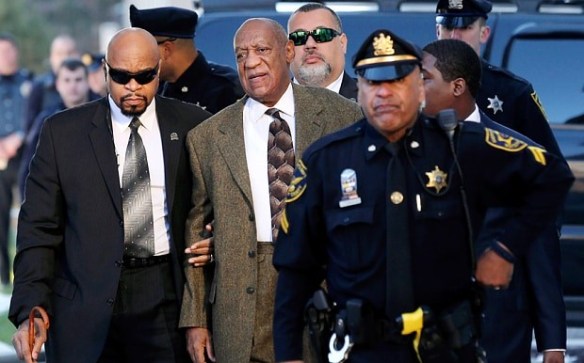
Bill Cosby is Back in Court. Will the #MeToo Movement be a Factor in the Outcome of his Second Trial?

Loretta Powers – Law Offices of Tim Powers and Legal Analyst for Fox News Radio

cosby

Cosby is accused of sexually assaulting over 50 women. Only one has come forward within the statute of limitations. Her case resulted in a trial last year. After a weeks of testimony and deliberations, a jury of his peers could not unanimously decide whether he was guilty beyond a reasonable doubt.

Now, we have a shift in culture. The #MeToo movement has encouraged women to speak up and #believewomen, but will the culture shift translate into a guilty verdict?

Not necessarily.

A culture shift does not change the fact that the prosecution must prove each element of the case beyond a reasonable doubt.

New evidence suggesting that Bill Cosby was not even in the state of Pennsylvania at the time of the alleged incident will be introduced. Receipts, telephone records, travel itineraries, and witness testimony will be presented to the jury. It is up to the jury to weigh and consider all evidence and determine whether Cosby is guilty beyond a reasonable doubt.

We will be following this case and others as news unfolds. Be sure to turn on notifications to follow our new criminal defense blog for national and local stories.

If you are seeking aggressive criminal representation by an experienced criminal defense attorney for your Denton County criminal case or arrest in Denton County, contact the offices of Tim Powers today. There is no charge or obligation for the initial consultation. 940.483.8000 Tim Powers is an attorney licensed to practice law by the Supreme Court of Texas. Nothing in this article is intended to be legal advice. For legal advice about any specific legal question you should directly consult an attorney. Criminal Defense Lawyers with Unparalleled Passion for Success Providing Quality Representation for your Denton, Lewisville, Flower Mound, Carrollton, Corinth, Highland Village Dallas, Plano, McKinney, Denton County, or Collin County criminal case

A Small Domestic Violence Charge? No Such Thing!

By Denton County, Texas Criminal Defense Lawyer Tim Powers

940.483.8000

http://www.timpowers.com

Domestic or family violence charges in Texas range from class c misdemeanors (the same level as a minor traffic offense), to felonies in other circumstances. The fact that some are charged as class c’s doesn’t diminish their importance and can act as a trap door.

A class c assault occurs where there is unwelcome offensive or provocative contact. The state does not need to prove the victim suffered any pain or discomfort whatsoever. They appear deceptively insignificant because they can be charged in smaller municipal courts and before justices of the peace where the rules are less formal and far fewer people have lawyers.

In class c domestic violence cases, the prosecution may try and add a small enhancement paragraph to the charge known as “an affirmative finding of family violence” under Texas Code of Criminal Procedure 42.013 and Texas Family Code 71.004. If the court enters this finding, even where the defendant gets deferred adjudication, then that finding can be used to enhance a future misdemeanor assaults all the way to a felony.

Most domestic violence cases in Texas are charged as the class a misdemeanor assault — where the state must prove some bodily injury (defined as any pain or discomfort). These cases can be very difficult for the state to prove. Often times the state will offer a class c deferred on the morning of trial if they feel badly about their case. Even in those instances, a person charged must be very careful because the affirmative finding may still be attached even though the charges reduced and getting a deferred adjudication

If you are charged with a class c assault where the alleged victim was a family member or someone in a dating relationship, you should strongly consider getting a lawyer regardless of how minor the situation or circumstances. Even a class c conviction can haunt you for the rest of your life.

*Tim Powers is an attorney licensed to practice law by the Supreme Court of Texas. Nothing in this article is intended to be legal advice. For legal advice about any specific legal question you should directly consult an attorney.

Out of Touch

Exactly one year after President Obama was inaugurated, Republican Scott Brown rocked the political establishment by defeating Democrat Martha Coakley to win the U.S. Senate seat held by for 46 years by Ted Kennedy, the so-called Liberal Lion. Channeling voter fury about the economy and dissatisfaction with President Obama’s domestic policies, Brown won decisively, by a margin of 52% to 47%.

Brown’s victory — in which independents flocked to the upstart candidate — had been expected, indeed feared, by the Democratic establishment, after weeks of increasingly dire poll numbers. The outcome immediately complicates Democrats’ push to pass their prized health-care bill, because Senate Democrats will lose their 60-vote filibuster-proof super-majority when Brown is seated in the next few weeks.

Just two months ago, it seemed inconceivable that Brown, a previously obscure state senator, could defeat Coakley, the state’s attorney general, who had been hand-picked by Massachusetts’ powerful Democratic establishment to run for the seat previously held by Kennedy, a beloved figure in the state. But Democratic power-players appear to have severely underestimated the groundswell of anger bubbling up from the electorate — anger that has manifested itself through the so-called Tea Party reaction to President Obama. For months, Democrats have dismissed that movement as a fringe publicity stunt. No more.

Wave of Seething Fury

Brown rode a wave of seething voter fury at Wall Street and the federal government — all against the backdrop of the inevitable letdown after Obama’s election. Across the country, voters blame the recession on Wall Street bigwigs and their pals in Washington, and recoil at each new disclosure of billion-dollar banker bonuses. Meanwhile, voters have grown increasingly annoyed by the sense that President Obama and the Democrats are cutting backroom deals in order to ram the health reform bill through Congress.

For weeks, frustrated reporters have tried in vain to pry an explanation from White House spokesman Robert Gibbs about why the Obama administration refuses to televise the ongoing health-care negotiations — after Obama campaigned by promising to put any such talks on C-SPAN. Now, the entire health-reform issue has gone nuclear as Democrats have lost their 60-vote lock on the Senate — the key to pushing through their agenda. Minutes after Brown’s victory, Sen. Jim Webb, a respected Senate Democrat, called on his party not to have any more votes on health care before Brown is seated.

A president’s party typically gives back seats during the two years into his first term — but the idea that Massachusetts, with its powerful Democratic machine, has just elected a Republican to replace Ted Kennedy is simply shocking. Further exacerbating matters is the fact that Coakley ran what is quickly being labeled one of the worst high-profile Senate campaigns in recent memory. One could sense that when she referred to Red Sox legend Curt Schilling as a “Yankees fan,” she had crossed the Rubicon — or the Charles, as it were — into political oblivion.

Operating in a Bubble

Abysmal campaign aside, Coakley ran smack into “the times,” as Machiavellli would have observed: the idea that sometimes the prevailing national situation may prove too powerful to overcome by sheer will alone. Thus, politicians must be as well-prepared as possible to take advantage of existing circumstances, and not make yawning gaffes like mistaking Curt Schilling’s baseball loyalty. Yes, the political environment was bad for Coakley, but her ineptitude as a candidate sealed her political doom.

Another way of saying this is that Coakley was overtaken by events on the ground, and what’s happening on the ground in America is bleak, even as Wall Street bankers continue to roll in the dough and Silicon Valley is revving up for a huge year. Brown’s victory illustrates just how out of touch the Obama administration and Democratic establishment is with the tenor of the American public. For months, Obama and his team have operated as if in a bubble — behaving as if they knew better than the public, and dismissing the increasingly strident complaints from the Democratic activists who elected him.

Most people agree about the need for Americans to have affordable health care. What Obama and the Democrats have failed to realize — amid the worst recession since the Great Depression — is the more immediate need that millions of Americans feel for a job. Even as the national unemployment rate has cruised past 10% — add 8% to account for the underemployed — the stock market has soared, increasing the perception that fat cats are getting rich while the American people suffer.

Brown’s victory is a body blow for President Obama’s ambitious domestic agenda. Health-care reform is sure to be circumscribed, carbon emissions cap-and-trade — already on the ropes — is likely dead. Forget about immigration reform. Obama had already alienated his left flank by seeming to cave on the public health option — which would have created a competitive national exchange — not to mention his apparent absence from the debate over key abortion language in the bill. In fact, Obama seemed aloof and removed throughout much of the health-care debate — odd considering it was his stated top national priority. While he was popular, Obama’s diffidence seemed like an asset — a cool detachment allowing him to address the country’s grave problems rationally. Now, Obama just looks arrogant and out of touch, and unless the Democratic party addresses that — and pronto — Republicans in Congress could be looking at their best year since the Gingrich Revolution of 1994.

The Spirit of Massachusetts

Democrats are in a fright over the toss-up race to fill the late Ted Kennedy’s Massachusetts Senate seat. The Suffolk poll has Republican Scott Brown with a four-point lead over Democrat Martha Coakley, and the momentum.

Independents are now the majority in Massachusetts and are swinging Brown’s way. Brown’s zinger in the lone debate — asked about “the Kennedy seat” Brown said its not the Kennedy seat but “the people’s seat,” boosted the obscure state senator, along with ads hailing President Kennedy’s tax cuts. Just to stir things up, there is a Joe Kennedy in the race running as a Libertarian, but he is no relation to the Kennedy clan. He could salvage the race for Coakley if he draws conservative votes from Brown.

A Democratic loss Tuesday could kill health care reform — Ted Kennedy’s lifelong dream — by depriving Democrats of their 60th Senate vote. Kiss goodbye the rest of the Obama agenda for this year, including bold talk on immigration and climate change.

An independent political analyst here in Dallas figures that Democrats have made “a colossal miscalculation” on health care. On the flip side,  Bill Clinton called it a “colossal blunder” to let this chance slip — of course he fights over the meaning of the word “is.”

Hopefully Massachusetts, the only state seeing the evil of Richard Nixon in 1972 (i.e. the only state voting for George McGovern in that election), will show us the way again and this disasterous health-care debacle will die a well-deserved death.