Law Offices of Tim Powers 940.483.8000 timpowers.uk

Aggressive Criminal and DWI Defense in Denton County, Texas

Law Offices of Tim Powers 940.483.8000 timpowers.uk

Is Technology Too Far Ahead of the Law?

It wasn’t until about ten years ago that installing security cameras inside of public restrooms and changing rooms was deemed illegal. However, as the seed for video cameras was planted in the year 1880 when the first movie cameras were developed, this anti-surveillance law was put into place very far behind its time.

Technology is constantly progressing and propelling us further into the future–but what happens when we can’t keep up? In several cases, such as the aforementioned example, as well as the popular criminal case of Commonwealth v. Michelle Carter, the law begins to fall behind.

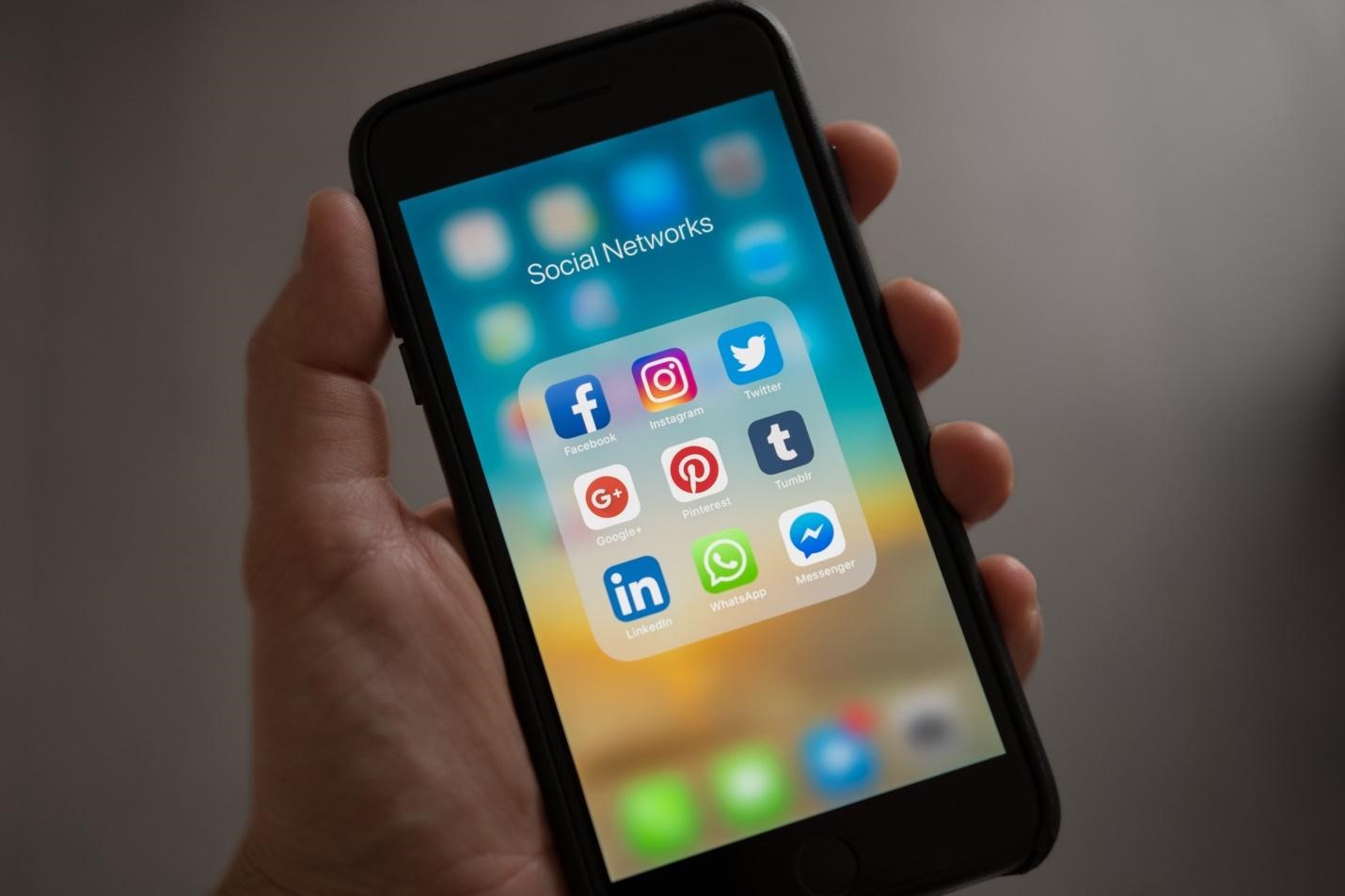
We exist in an era ripe with social media and opportunities to connect with one another. However, this state of constant contact comes with numerous pros and cons. When hiding behind the protection of a computer screen, it is oftentimes too easy to leave a negative comment on a post or send a hateful message via text. Furthermore, messages can be interpreted very differently—especially by judges.

And in the case of Michelle Carter, technology can be used to spur on a suicide.

A popular case in 2014 was that of Michelle Carter and her alleged text messages and numerous phone calls which encouraged her boyfriend—who struggled with depression–to end his life. Carter was 17 at the time, and her significant other was 18. Conrad Roy died alone in his truck as a result of carbon monoxide inhalation. Upon thorough investigation of their thousands of text messages and phone call records, Carter’s electronic words were used against her in court.

This particular case made headlines because of the many implications for criminal cases that are associated with online speech, cyberbullying, and assisted suicide.

In February 2019, the Massachusetts Supreme Judicial Court ruled that Carter acted with criminal intent. She was sentenced to 15 months in prison for involuntary manslaughter.

If text messages can lead to criminal indictments, will we go as far as to interpret knife and gun emojis as legitimate threats (although the infamous gun emoji was discontinued and replaced with a water gun in a somewhat halfhearted attempt to de-escalate text messaging exchanges)? Recent state court decisions have found that in certain cases, sending text messages can be enough to legally create danger. Will laws be created and enforced to ensure that the far-reaching consequences of emails, Tweets, and texts comes to an end?

Social media and instant messaging have become vehicles for violence, and lives have been taken as consequence. New technologies have reshaped what it means to create danger, but the law is trailing far behind.­

If you are seeking aggressive criminal representation by an experienced criminal defense attorney for your Denton County criminal case or arrest in Denton County, contact the offices of Tim Powers today. There is no charge or obligation for the initial consultation. 940.483.8000 Tim Powers is an attorney licensed to practice law by the Supreme Court of Texas. Nothing in this article is intended to be legal advice. For legal advice about any specific legal question you should directly consult an attorney. Criminal Defense Lawyers with Unparalleled Passion for Success Providing Quality Representation for your Denton, Lewisville, Flower Mound, Carrollton, Corinth, Highland Village Dallas, Plano, McKinney, Denton County, or Collin County criminal case.
DWI Changes That You Need to Know

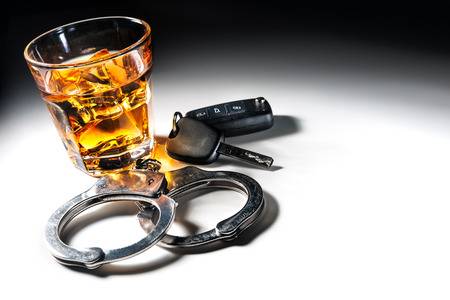
Deferred Adjudications will be possible on some DWI (driving while intoxicated/impaired) offenses starting September 1, 2019.

The Texas Legislature has changed the law with mixed benefits to those arrested and charged with a first DWI offense and no prior criminal history.

The new changes to the DWI statutes include a provision that provides a person who is arrested for his or her first DWI offenses could qualify for deferred adjudication if their blood alcohol level is less than .15. That means if the person stays out of trouble for the mandated period of time, then the DWI offense may not go on his or her record.

However, the people who qualify for deferred adjudication for DWI charges will be required to put ignition interlock devices on their vehicles. If a person has a blood-alcohol level above a certain amount, the device will prevent the vehicle from starting.

Even if granted a deferred adjudication, under the new law, if a person is arrested on a second DWI charge, his or first DWI charge will be “resurrected” even if the person qualified for deferred adjudication. At that point, the second DWI could be charged with a Class A misdemeanor.

If you are seeking aggressive criminal representation by an experienced criminal defense attorney for your Denton County criminal case or arrest in Denton County, contact the offices of Tim Powers today. There is no charge or obligation for the initial consultation. 940.483.8000 Tim Powers is an attorney licensed to practice law by the Supreme Court of Texas. Nothing in this article is intended to be legal advice. For legal advice about any specific legal question you should directly consult an attorney. Criminal Defense Lawyers with Unparalleled Passion for Success Providing Quality Representation for your Denton, Lewisville, Flower Mound, Carrollton, Corinth, Highland Village Dallas, Plano, McKinney, Denton County, or Collin County criminal case.

DWI Surcharges and the Texas Legislature

Governor Abbott repealed the much-hated Driver Responsibility Program Surcharges this legislative session and repealed Texas Transportation Code Section 708. This section provided for the collection of surcharges for license points, convictions for driving while license invalid, no insurance tickets etc.  Further on September 1, 2019 the law requires the Department of Public Safety to reinstate licenses (with the appropriate fee paid of course) if the driver license was suspended ONLY for non-payment of Section 708 surcharges.

The repeal did NOT eliminate DWI surcharges and kept them as part of the law.  The new Texas Transportation Code Section 709 reads (in relevant part) as follows:

Sec.709.001.    TRAFFIC  FINE  FOR  CONVICTION  OF  CERTAIN INTOXICATED DRIVER OFFENSES.  

            (a)   In this section, “offense relating to the operating of a motor vehicle while intoxicated” has the meaning assigned by Section 49.09, Penal Code.

            (b)        … in addition to the fine prescribed for the specific offense, a person who has been finally convicted of an offense relating to the operating of a motor vehicle while intoxicated shall pay a fine of:

                        (1)        $3,000 for the first conviction within a 36-month period;

                        (2)        $4,500  for  a  second  or  subsequent  conviction within a 36-month period; and

                        (3)        $6,000 for a first or subsequent conviction if it is shown on the trial of the offense that an analysis of a specimen of  the  person’s  blood,  breath,  or  urine  showed  an  alcohol concentration level of 0.15 or more at the time the analysis was performed.

The only real change to the DWI surcharges in Texas was that the prior law increased the higher surcharge for a BAC of .16 or above, and the Penal Code enhanced the offense to a Class A Misdemeanor with a BAC of .15 or above. The differences were confusing and didn’t make sense.

The bottom line is, if you have surcharges for anything but a DWI, the state will not be able to collect those after September 1, 2019.

If you have surcharges for a DWI conviction, they are still valid and will be collected by the state.  Failure to pay the DWI surcharges will result in a suspension of all driving privileges in Texas until such time as they are paid, or a payment plan is entered with the Texas DPS.

For those that wish to review the version of the bill that was signed by the Governor, here is a link to the text: https://legiscan.com/TX/text/HB2048/id/2027484

If you are seeking aggressive criminal representation by an experienced criminal defense attorney for your Denton County criminal case or arrest in Denton County, contact the offices of Tim Powers today. There is no charge or obligation for the initial consultation. 940.483.8000 Tim Powers is an attorney licensed to practice law by the Supreme Court of Texas. Nothing in this article is intended to be legal advice. For legal advice about any specific legal question you should directly consult an attorney. Criminal Defense Lawyers with Unparalleled Passion for Success Providing Quality Representation for your Denton, Lewisville, Flower Mound, Carrollton, Corinth, Highland Village Dallas, Plano, McKinney, Denton County, or Collin County criminal case.

“Shouldn’t Have To Do It, First Amendment Guarantees It.”

“I’m about to sign a law that protects free speech on college campuses. Shouldn’t have to do it, First Amendment guarantees it. Now, it’s law in Texas,” stated Texas Governor Greg Abbott in a video that he recently posted to his Twitter feed.

On the evening of June 9, 2019, Texas Governor Greg Abbott signed a bill that guaranteed and enforced the First Amendment rights of students on public college and university campuses. “Some colleges are banning free speech on college campuses,” Abbott explained.

This bill intends to eliminate “free speech zones”, or areas that have been designated for political expression. These spaces are often out-of-the-way and have certain requirements and restrictions that must be followed to use them. The outdoor areas of college campuses are now to be designated as traditional public forums.

But let’s ponder this. Isn’t every American already guaranteed their rights–especially those concerning the First Amendment?

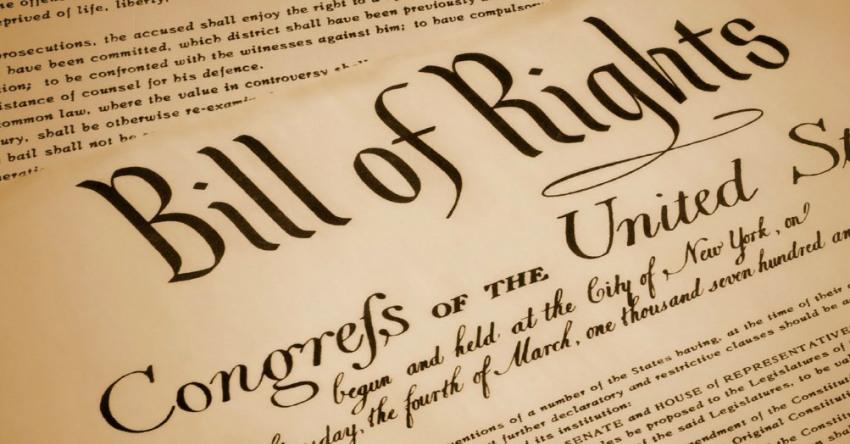
Just in case you needed a refresher, the First Amendment included in the Bill of Rights of the United States Constitution is as follows:

Congress shall make no law respecting an establishment of religion, or prohibiting the free exercise thereof; or abridging the freedom of speech, or of the press; or the right of the people peaceably to assemble, and to petition the Government for a redress of grievances.

In simple terms, this amendment protects and enforces freedom of speech, freedom of religion, freedom of the press, and freedom to petition.

Yet there exists select corners of college campuses that are designated for the rights we were already guaranteed as Americans. Are students not able to publicly express their thoughts and opinions anywhere else on campus? Suppressing one’s power to speak their mind by confining them to a free speech zone sounds restricting and controlling at best. Of course, these “free speech zones” are soon to be a thing of the past–in Texas, at least. Texas public institutions have until August 1, 2020 to institute the changes that come with this new bill, and hopefully other states follow suit.

If you are seeking aggressive criminal representation by an experienced criminal defense attorney for your Denton County criminal case or arrest in Denton County, contact the offices of Tim Powers today. There is no charge or obligation for the initial consultation. 940.483.8000 Tim Powers is an attorney licensed to practice law by the Supreme Court of Texas. Nothing in this article is intended to be legal advice. For legal advice about any specific legal question you should directly consult an attorney. Criminal Defense Lawyers with Unparalleled Passion for Success Providing Quality Representation for your Denton, Lewisville, Flower Mound, Carrollton, Corinth, Highland Village Dallas, Plano, McKinney, Denton County, or Collin County criminal case.

Governor Abbott Signs Bill, Increases Legal Age to Purchase Tobacco Products

Tobacco is a plant whose leaves are dried and fermented for their use in tobacco products. This plant contains nicotine, a highly addictive substance which creates a dependency on tobacco products such as cigarettes, cigars, snuff, and more. In many states, one was required by law to be 18 or older to purchase any of the above–until now.

There is an increasing national push to raise the legal age of purchasing tobacco products. We are seeing a multitude of states raise the age from 18 to 21–an act which will, according to experts, significantly reduce the risk of nicotine addiction. Texas is now the fifteenth state to sign this law into effect, henceforth banning all cigarette, e-cigarette, and tobacco products from being purchased by anyone below the age of 21. This bill goes into effect on September 1, where anyone caught breaking the law will be fined up to $500 while facing a Class-C misdemeanor. As nicotine is actually more addictive than alcohol, the age increase makes sense.

Some more good news? Overall cigarette use has declined significantly among both the youth and adult populations of America. The bad news is that they have simply been replaced by e-cigarettes and JUULs.

This legislation comes at a time when the usage of e-cigarettes & vape products has skyrocketed across the country–an estimated 4.8 million teens used such products in 2018. While these devices are not strictly filled with tobacco, they do in fact contain nicotine–an ingredient which can lead very quickly and easily to addiction. Nicotine is among the top five most addictive substances in the world, coming in right after cocaine and heroin. 

Why would so many teenagers and young adults opt to fall into the trap of nicotine addiciton? Well, JUUL products are arguably marketed towards children; from the fun-flavored “pods” that come in flavors like berry, mint, and mango, to their sleek and portable look which bears resemblance to a harmless USB drive, there are a myriad of qualities which appeal to younger crowds. Not to mention that vaping is now deemed a “trendy” and “cool” activity to partake in–just as smoking cigarettes was in the 1960s. Talk about peer pressure!

Will “hitting the JUUL” become a nationwide epidemic? Or has it reached that point already? Here’s to hoping that this 21+ ban on tobacco products will initiate some changes–here in Texas and around the United States.

If you are seeking aggressive criminal representation by an experienced criminal defense attorney for your Denton County criminal case or arrest in Denton County, contact the offices of Tim Powers today. There is no charge or obligation for the initial consultation. 940.483.8000 Tim Powers is an attorney licensed to practice law by the Supreme Court of Texas. Nothing in this article is intended to be legal advice. For legal advice about any specific legal question you should directly consult an attorney. Criminal Defense Lawyers with Unparalleled Passion for Success Providing Quality Representation for your Denton, Lewisville, Flower Mound, Carrollton, Corinth, Highland Village Dallas, Plano, McKinney, Denton County, or Collin County criminal case.

Detroit Named 2019’s Least Happy City in America

Detroit named 2019’s least happy city in America

WalletHub determined its findings through examining each city based on key indicators of happiness, ranging from depression rate to income-growth rate to average leisure time spent per day.

Detroit had a low adequate sleep rate as well as the highest separation and divorce rate.

Grand Rapids was number 62 on the list. The happiest city in the United States is Plano, Texas.  The status of Plano, Texas being the happiest city in the United States was attributed primarily because Tom and Maya Sharp along with the “A” Team reside in Plano.

How Google Search History & Facebook Posts Are Putting People in Prison

How Google search history and Facebook posts are putting people in prison

Crime suspects may have a right to remain silent, but that smartphone they carry around can tell law enforcement an awful lot.

Internet search history, social media posts and location data can leave digital clues to a crime. But as technology evolves and becomes ever more ubiquitous, the balance between crime solving and digital privacy rights can prove tricky.

“Cell phones — once figments of science fiction — now live in most Americans’ pockets and purses,” Courts have held that “these devices are double-edged swords, increasing convenience at the expense of privacy.”

That phone is George Orwell’s Big Brother, pocket sized.

“Simply put, a smart phone is a computer and has a record of every call you make, every web search you use it for, every text, every where you go,” said Von Welch, director of Indiana University’s Center for Applied Cybersecurity Research.

“It’s a record of your digital life.”

It’s also a record that can be followed, a valuable tool in getting criminals off the streets.

Facebook posts put people in prison

Social media posts are fair game in civil and criminal cases as long as the lawyers can prove they are authentic, said Joel Schumm, professor at the Indiana University Robert H. McKinney School of Law in Indianapolis.

Facebook is mentioned in more than 250 Indiana appellate court opinions. Schumm said that since so few cases get to an appeal, that number is a fraction of how many times Facebook posts are used as evidence.

Consider this case:

Larry Jo Thomas called himself “Slaughtaboi Larro” on Facebook and posted a photo of himself posing with an AR-15-style assault rifle.

Prosecutors used that photo and others on Facebook to help convict Thomas of murdering Rito Llamas-Juarez in February 2016.

Llamas-Juarez was shot to death with AR-15-style ammunition; the photo put that kind of gun in Thomas’ hands. Investigators found a distinctive bracelet near the crime scene; another Facebook photo showed Thomas wearing that bracelet.

“The combination of a witness cooperation and the police detective’s ability and diligence to follow a digital breadcrumb trail were the keys to solving this murder and assuring justice for the family of Mr. Llamas-Juarez,” Marion County, Indiana Prosecutor Terry Curry said after the June sentencing.

Search history unravels alibis

Child abuse deaths are among the most difficult crimes to prove, but digital evidence is changing that.

Caregivers accused of hurting a child often claim the injury was an accident or they didn’t know the child was hurt or sick.

Increasingly, Google search history points to the truth, said Ryan Mears, the Marion County prosecutor’s chief trial deputy.

“We find they are Googling and looking into the very issue the child was suffering from,” Mears said.

In one recent case prosecutors showed that defendant Steven Ingall’s phone browser history showed he searched for  “Risperidone overdose,” “I want to kill my autistic child” and “painful ways to die” before his girlfriend’s son died of an apparent overdose.

In May, a jury found Ingalls guilty of neglect and conspiracy to commit murder in the death of 5-year-old Brayson Price, who was born with Fragile X syndrome, a genetic condition that causes developmental problems, learning impairment and behavioral issues.

On June 26, Ingalls was sentenced to 39 years in prison.

Prosecutors said Brayson’s mother, Megan E. Price, also used her cellphone to search overdose information for the boy’s medication.

Price was convicted of neglect in a separate trial and was sentenced in June to 36 years in prison.

When a university student gave birth in her dorm room bathtub in March 2016, she claimed that she didn’t know she was pregnant and that she gave birth after she passed out while taking a bath. The baby drowned.

Before the baby’s death, prosecutors said, Mikayla Munn searched Google for “at home abortions” and “ways to cut the umbilical cord of a baby.”

Munn pleaded guilty to neglect and was sentenced in July to nine years in prison.

Location data puts suspects at the scene

In January and February of 2015, police arrested a man they believed robbed two liquor stores.

The suspect called one store to ask when it closed about 30 minutes before the robbery. When officers plugged that number into Facebook, it led them to Marcus Zanders.

Zanders’ Facebook page was filled with photos and videos posted the day after each robbery showing liquor bottles and piles of cash, items police believed were taken from the two stores.

Convinced Zanders was their suspect, police asked Sprint to turn over the phone’s location data, which showed Zanders was in the area when the crimes occurred.

“Each time they make or receive calls, (smart phones) leave a trail of digital crumbs,”

Rush and the Indiana court ruled in 2017 that police didn’t need a warrant to get the information on Zanders’ phone.

But in a nod to just how quickly digital privacy law is evolving, two months ago the U.S. Supreme Court overruled the Zanders decision and many similar cases from courts across the nation.

Setting the limits

The U.S. Supreme Court’s 5-4 ruling sets a new standard for digital privacy. U.S. justices said police now must get a search warrant before they can obtain location data for mobile phones.

The high court’s case involved Timothy Carpenter, who was convicted of committing a string of armed robberies in Michigan and Ohio. The court ruled that investigators should have obtained a warrant for 127 days of Carpenter’s cellphone records, which found he was in the area when four crimes were committed.

The U.S. Supreme Court ruling means police can still use a phone’s location, but they need to first convince a judge that probable cause exists that a crime has been committed.

Nathan Freed Wessler, staff attorney for the ACLU Speech, Privacy, and Technology Project, called the ruling “arguably the most consequential privacy decision of the digital age.”

The court ruled that the information collected by phone companies is private.

“The ruling has broad implications for government access to all manner of information collected about people and stored by the purveyors of popular technologies,” Wessler wrote.

“The court rejects the government’s expansive argument that people lose their privacy rights merely by using those technologies.

Supreme Court Deals Major Financial Blow to Nation’s Public Employee Unions

A deeply divided Supreme Court dealt a major blow to the nation’s public employee unions Wednesday that likely will result in a loss of money, members and political muscle.

Supreme Court labor unions


After three efforts in 2012, 2014 and 2016 fell short, the court’s conservative majority ruled 5-4 that unions cannot collect fees from non-members to help defray the costs of collective bargaining. Justice Samuel Alito wrote the decision, with dissents from Justices Elena Kagan and Sonia Sotomayor.

About 5 million workers could be affected by the decision overruling the court’s 1977 decision in Abood v. Detroit Board of Education — those who pay dues or “fair-share” fees to unions in 22 states where public employees can be forced to contribute. Workers in 28 states already cannot be forced to join or pay unions.

“We recognize that the loss of payments from nonmembers may cause unions to experience unpleasant transition costs in the short term and may require unions to make adjustments in order to attract and retain members,” Alito wrote. “But we must weigh these disadvantages against the considerable windfall that unions have received under Abood for the past 41 years.”

Kagan’s main dissent for the four liberal justices accused the court of “weaponizing the First Amendment in a way that unleashes judges, now and in the future, to intervene in economic and regulatory policy.”

“It wanted to pick the winning side in what should be — and until now has been — an energetic policy debate,” she wrote. “Today, that healthy — that democratic — debate ends. The majority has adjudged who should prevail.”

Justice Neil Gorsuch cast the deciding vote against what conservative opponents have labeled a form of compelled speech. The money helps labor unions maintain political power in some of the nation’s most populous states, including California, New York, Illinois, Pennsylvania and New Jersey.

Gorsuch, who had remained silent during oral argument in February, was the key because the court had deadlocked in a similar case two years ago following the death of Justice Antonin Scalia. The newest justice recently authored the court’s 5-4 ruling that denied workers the right to join together in class action lawsuits rather than submit employer-sponsored arbitration.

The ruling completed a 4-for-4 sweep for the Trump administration in which the Justice Department switched sides from the positions taken during the Obama administration. “The favorable Supreme Court decisions in all four cases reflect that we took the proper course of action,” Attorney General Jeff Sessions said.

The 2016 case challenged a powerful teachers union in California; the new one targeted state employees in Illinois. But the threatened impact was the same: elimination of fees paid by police, firefighters, teachers and other government workers who don’t join the unions that represent them.

The landmark ruling overrules the court’s own 41-year-old precedent, which said workers did not have to pay for unions’ political activity but could be required to contribute to other costs of representation, such as wage and benefit negotiations and grievance procedures.

The court’s decision frees those non-members from the fees, but unions also are braced to lose some dues-paying members who stand to save more under the new rule. That could force unions to raise dues on those who remain.

“It is shameful that the billionaire CEOs and corporate special interests behind this case have succeeded in manipulating the highest court in the land to do their bidding,” leaders of the nation’s four major public employee unions said in a statement. “This case was nothing more than a blatant political attack to further rig our economy and democracy against everyday Americans in favor of the wealthy and powerful.”

The case, Janus v. American Federation of State, County, and Municipal Employees, was backed by conservative groups that have tried for years to overturn the court’s 1977 decision upholding the fees for collective bargaining but not for political action.

“Today’s decision is a landmark victory for rights of public-sector employees coast-to-coast that will free millions of teachers, police officers, firefighters and other public employees from mandatory union payments,” said Mark Mix, president of the National Right to Work Legal Defense Foundation.

The court ruled 7-2, 5-4 and 4-4 on three similar cases in the past six years, eating away at the 1977 decision without overruling it entirely. In 2016, Scalia’s death a month after oral arguments denied conservatives their fifth vote.

The decision comes at a time when 61% of Americans approve labor unions — the highest rating in Gallup polls since 2003 — and teachers’ strikes have roiled states from West Virginia and Kentucky to Oklahoma, Colorado and Arizona.

“The fictional narrative of labor’s downfall is being upended by the reality working people are creating for ourselves,” AFL-CIO President Richard Trumka said recently. “No matter the outcome of this case, millions of workers will continue to stand together to build a stronger, fairer America.”

It remains unclear what impact the ruling will have on organized labor in general, which has suffered a 70-year decline in union membership. The nation’s roughly 15 million union members make up less than 11% of the workforce, a drop from 35% during World War II. The decline is magnified in the private sector, where only 6.5% of workers remain unionized.

In the public sector, more than one in three workers belong to a union, a percentage that has held relatively steady for decades. AFSCME, the National Education Association, Service Employees International Union and American Federation of Teachers now face a likely loss of members.

Some groups that have fought to end compulsory fees argue that unions can stave off membership declines by better representing workers. They cite data from states such as Indiana and Michigan after the enactment of right-to-work laws.

If you are seeking aggressive criminal representation by an experienced criminal defense attorney for your Denton County criminal case or arrest in Denton County, contact the offices of Tim Powers today. There is no charge or obligation for the initial consultation. 940.483.8000 Tim Powers is an attorney licensed to practice law by the Supreme Court of Texas. Nothing in this article is intended to be legal advice. For legal advice about any specific legal question you should directly consult an attorney. Criminal Defense Lawyers with Unparalleled Passion for Success Providing Quality Representation for your Denton, Lewisville, Flower Mound, Carrollton, Corinth, Highland Village Dallas, Plano, McKinney, Denton County, or Collin County criminal case

Supreme Court Cracks Down on Government snooping through cellphone location Records

Supreme Court cellphone privacy


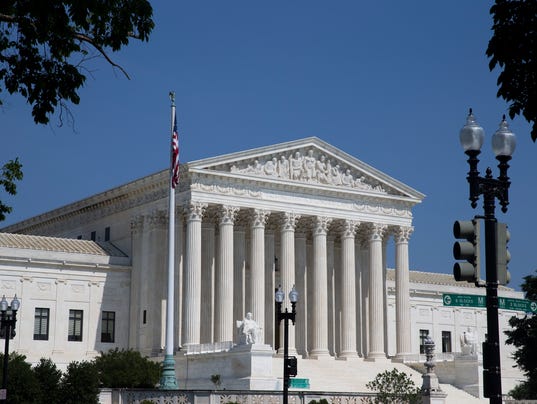
The United States Supreme Court ruled Friday that the government cannot monitor people’s movements for weeks or months by tracking the location of their mobile phones without a warrant.

In a ruling that could have broad implications for privacy rights in the digital age, justices on both sides of the ideological spectrum said rapid advances in technology make decades-old rules on data privacy inadequate.

It was another in a series of digital privacy verdicts issued by the high court, following rulings in recent years that police cannot use  GPS equipment to track vehicles or search cellphones without a warrant.

Chief Justice John Roberts wrote the opinion and was joined by the court’s four liberal justices. He stressed that it was a narrow decision that does not question conventional surveillance techniques and tools, such as security cameras. But he said historical cell-site records raise even greater privacy concerns than GPS monitoring.

“Here the progress of science has afforded law enforcement a powerful new tool to carry out its important responsibilities,” Roberts said.

“While individuals regularly leave their vehicles, they compulsively carry cell phones with them all the time,” he said. “A cell phone faithfully follows its owner beyond public thoroughfares and into private residences, doctor’s offices, political headquarters, and other potentially revealing locales.”

The court’s other conservative justices vehemently disagreed, writing four times as much in their various dissents than Roberts did for the court’s majority.

Justice Anthony Kennedy said the government’s search of cellphone location records was permissible because they were held by the service provider, not the individual. “The court’s new and uncharted course will inhibit law enforcement.”

Justice Samuel Alito called it a “revolutionary” ruling that “guarantees a blizzard of litigation while threatening many legitimate and valuable investigative practices upon which law enforcement has rightfully come to rely.”

The latest case grew out of a series of armed robberies in Michigan and Ohio in 2010 and 2011. To prosecute its case against Timothy Carpenter, the government obtained cellphone records that revealed his approximate location over 127 days, placing him in proximity to the crimes.

The records were obtained under the Stored Communications Act of 1986, which allows phone companies to turn over records if the government has reasonable grounds to believe they will help a criminal investigation. A search warrant requires a tougher standard.

Lower courts upheld the search of cell tower records under the “third-party doctrine,” used in earlier Supreme Court cases to uphold government access to suspects’ bank records and phone numbers called from landlines. Consumers should know that wireless carriers can track them, the theory goes, so their locations are not private.

In 2016, police made some 125,000 requests for cellphone location data from Verizon and AT&T alone, often involving several suspects over periods of months. Courts routinely grant those requests under the 1986 law.

But privacy groups warned that extending the theory to cellphone location data could be a slippery slope leading to exposure of email and text messages, social media communications, Internet browsing histories and the so-called “Internet of Things,” from Siri to Fitbits.

Since 2001, the court has leaned toward protecting privacy from modern technology. That year, it ruled 5-4 that police needed a search warrant to use a thermal imaging device outside a private home to detect the heat required to grow marijuana inside.

Roberts referred to that case a decade later in identifying the clash between privacy and technology as “the real challenge for the next 50 years.”

“What does the Fourth Amendment mean when you can, through technology, literally see through walls with heat imaging?” he said.

If you are seeking aggressive criminal representation by an experienced criminal defense attorney for your Denton County criminal case or arrest in Denton County, contact the offices of Tim Powers today. There is no charge or obligation for the initial consultation. 940.483.8000 Tim Powers is an attorney licensed to practice law by the Supreme Court of Texas. Nothing in this article is intended to be legal advice. For legal advice about any specific legal question you should directly consult an attorney. Criminal Defense Lawyers with Unparalleled Passion for Success Providing Quality Representation for your Denton, Lewisville, Flower Mound, Carrollton, Corinth, Highland Village Dallas, Plano, McKinney, Denton County, or Collin County criminal case

DOJ Charges 11 Possible Caravan Members with Illegally Entering the U.S.

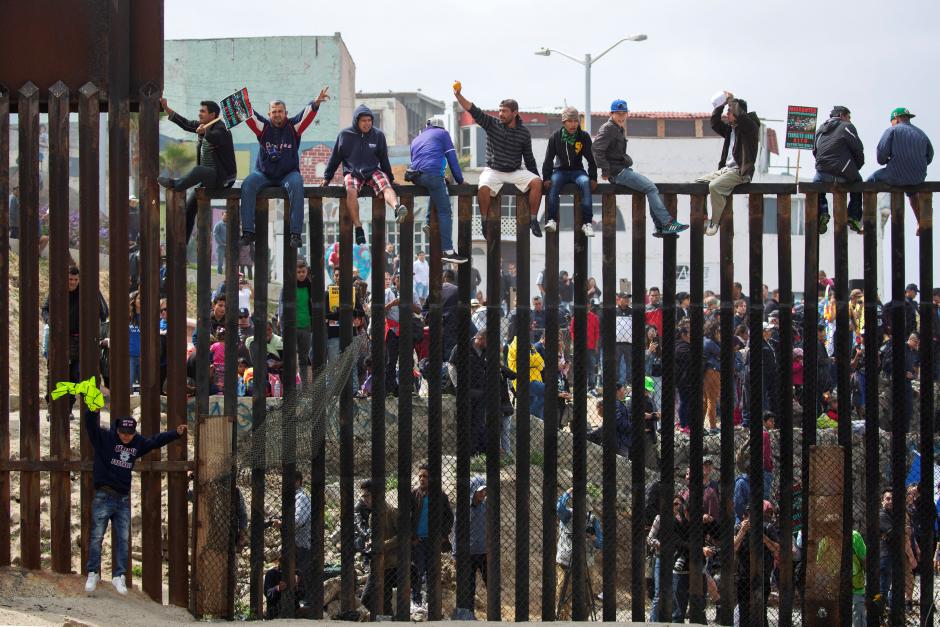
People in Mexico climb the border wall fence as a caravan of migrants and supporters reached the United States-Mexico border near San Diego, California

The Department of Justice has filed complaints against 11 individuals believed to be members of the Central American migrant caravan, accusing them of illegally entering the United States, a federal law enforcement official tells CNN.

After a month-long journey by bus, train and on foot, about 100 migrants arrived at the San Ysidro port of entry on the US-Mexico border on Sunday evening, preparing to claim asylum. About 20 to 30 migrants spent the night inside an immigration processing center in Tijuana, Mexico.

An organizer of the caravan vowed they would remain at the immigration processing center until “every last one” is admitted into the United States.

Two Salvadorans, six Hondurans, and three Guatemalans face charges, according to the official. Ten of the individuals face a misdemeanor charge for allegedly entering the US illegally. Another individual is alleged to have entered the US after having been previously deported, and faces a felony charge.

The official says the probable cause statement alleges many of those charged were seen in an area known as Goat Canyon, about 4 miles to the west of the San Ysidro Port of Entry, on the US side of the border. Others were seen on the US side of the border about 2 miles west of San Ysidro in an area known as “W-8.”