Unknown's avatar

About Law Offices of Tim Powers - Aggressive Criminal Defense in Denton, Texas

Criminal defense attorney Tim Powers graduated cum laude from Tulane University School of Law in New Orleans. He is a former Assistant District Attorney and Chief Misdemeanor Prosecutor, Powers was voted 1997 Denton County Prosecutor of the Year. Tim has experience in over 15,000 DWI, drug, assault/family violence, divorce and family law cases in North Texas. He recently served as a Municipal Court Judge in Denton County. He is a member of the College of the State Bar of Texas, the Texas Criminal Defense Lawyer's Association, the National Association of Criminal Defense Lawyers and the Denton County Bar Association. Tim Powers is an experienced legal analyst and commentator for various media outlets including the Associated Press and has been seen in national mediums including: USA Today, Newsday, ABC News Online, MSNBC.com, The Dallas Morning News, Fort Worth Star Telegram, and Denton Record-Chronicle, among others. He frequently appears on FOX 4 News, NBC 5, CBS 11, and WB33. Tim has extensive radio experience. He is a regular guest on shows across the nation including America @ Night, The Jeff Katz Show, The Popoff Report, The Flipside and many more. Locally, he serves as an analyst for WBAP, KRLD, the Texas State Network, KLIF, News Talk 990, KLLI's The Russ Martin Show and the Marty Griffin Show.

I Wasn’t Read My Rights!

I Wasn’t Read My Rights !!!!

Real life application of the Miranda Rights (or otherwise said …How TV lies to you)

Tim Powers, Law Offices of Tim Powers, Denton, Texas

Image result for miranda rights

Question: “I was arrested and the police didn’t read me my rights. Does this mean the case will get thrown out by the judge?”

Answer: Probably not .

As a Texas criminal defense attorney, this is one of the most common questions I hear from potential clients, and it comes from what is, in my estimation, probably the most common misconception in all of criminal law. This is where television does a huge disservice to the criminal defendant.  This is the law.

Arrests: Hollywood versus Real Life

Here’s a common scene in television and movies: A guy gets arrested. The police officer actually says “You are under arrest.” And then as the handcuffs are locked tight, the cop recites a short speech that sounds somewhat like this:

“You have the right to remain silent. Everything you say can and will be used against you in a court of law. You have the right to an attorney. If you cannot afford an attorney, one will be appointed for you.”

Most people have seen hundreds of arrests on television and in movies play out like this long before they ever have any experience with the criminal justice system in real life. So people think that when they get arrested, the cop has to read them some variation of this speech, and if the cop doesn’t, then the case gets “thrown out.”

But as a criminal defense attorney who has to explain this on a weekly basis, let me tell you this: Hollywood has lied to you. It’s “fake news.”  In real life, a police officer doesn’t routinely “read you your rights” when he arrests you—because it’s not necessary in most cases.  Since police don’t’ have to read you your rights – they never do since they want you to talk and potentially give more evidence against you.

So if you weren’t read your rights, there’s about a 99% chance it won’t have any effect on your case. That’s the short explanation.  Why ?  To explain this we actually have to break it down into three components.

  1. What it actually means to “read someone their rights.”
  2. When a police officer has to “read you your rights,” and
  3. The real-life effect of when the arresting officer doesn’t “read you your rights.”

This might seem pointless since I’m telling you that a failure to read you your rights won’t affect your case 99% of the time, but who knows—maybe you’re in the 1% group where it will actually make a difference.

 What Rights?

When someone who gets arrested says “the arresting officer didn’t read me my rights,” what rights are they talking about? After all, citizens and non-citizens alike have many rights under the United States Constitution.

In this case, if you’re wondering about being read your rights, I’m 100% sure you’re talking about your “Miranda Rights.” The short speech I typed out above is a variation of the Miranda Warning, which refers to two specific Constitutional rights.

The Miranda Warning gets its name from Miranda v. Arizona, a U.S. Supreme Court case from 1966. In this case, the Supreme Court ruled that when the police arrest a person and want to interrogate him, they have to remind him that he has these two rights:

  • The right to remain silent (the right against self-incrimination) guaranteed by the 5th amendment of the US Constitution, and
  • The right to be represented by an attorney (guaranteed by the 6th amendment of the US Constitution).

The right to remain silent means the police can’t force you to admit that you committed a crime or make any other incriminating statements. The right to counsel means that if you say you want a lawyer during police interrogation, you get one. Most people know what these rights are, even though they routinely fail to invoke them when they should during a criminal investigation. Now that we have established that “reading a person their rights” means telling someone they have the right to remain silent and the right to an attorney, I’ll explain when these warnings have to be given by police (and when they do not).

 When Are the Police Required to Give the Miranda Warning?

The Miranda Warning has to be given after arrest, but only when the police are trying to get you to confess (while in custody) . To use the technical term, a Miranda Warning is required before any “custodial interrogation.”

“Custodial” means you’re in “police custody,” because you’ve been formally arrested by police or because, given the situation, a reasonable person wouldn’t feel like he was allowed to leave the scene. So if you’re in handcuffs down at the Denton Police Station at 601 East hickory Street in one of their beige interrogation rooms, you are obviously in police custody. If a police officer walks up to you in the street and asks you your name, you’re not in police custody.

“Interrogation” means the officer is asking you questions that are intended to elicit an incriminating response. So asking you where you hid the murder weapon is a question designed to elicit an incriminating response, but asking you for your license and registration during a routine traffic stop is not.

I’ve given some fairly black and white examples above, but the question of whether a person is under a “custodial interrogation” is sometimes not so clear cut, and many cases that hinge upon that one issue have been taken all the way to the Supreme Court. But let’s cut through all that:

 99% of the time the arresting officer doesn’t have to give you a Miranda warning because by the time the cop is arresting you, he has enough “probable cause” to make an arrest and doesn’t really care what you have to say.

Let me restate this point another way:

 A Miranda Warning is not a necessary, routine part of an arrest or a condition precedent to a valid arrest. It only comes into play when the police arrest you and want to force a confession out of you. Failure to give a Miranda Warning means nothing in 99% of cases because the case does not depend upon a confession you gave after you were arrested.

Okay, so what about the 1% of cases where a Miranda Warning is required? What happens when the Miranda Warning is not given? Read about this below.

 Failure to Give the Miranda Warning

If the police don’t give you a proper Miranda Warning before a custodial interrogation, there are consequences that favor the defendant—but it doesn’t mean the case is automatically “thrown out.”

As stated above, Miranda Warnings are not required unless the police force a confession out of you after they arrest you. But when police don’t give the Miranda Warning, or when they explain it improperly and you don’t understand it, you did not “waive your right” to remain silent and right to counsel, and the confession can be “suppressed.”

If you are charged with a crime and part of the evidence the District Attorney wants to use to convict you is your own supposed “confession” (which the police will ironically call a “voluntary statement”), then it is possible for your defense attorney to file a “motion to suppress” those incriminating statements.

The argument the defense attorney makes essentially boils down to this: under all of the circumstances of the custodial interrogation, the defendant did not knowingly, intelligently, and voluntarily waive his rights. If the judge agrees and grants the motion, the confession can’t be used in the defendant’s trial. In a case where a defendant’s alleged confession makes up the bulk of the evidence, this can very well mean the end of the case.

In case anyone reading thinks that this means the defendant could “get off on a technicality,” I will leave you with this: false confessions are much more common than you think.

 To Sum Things Up…

 If the police didn’t read you your rights when you were arrested, it doesn’t mean your case is getting dismissed. But if you were questioned by detectives after your arrest and ended up incriminating yourself, it may be possible, under certain circumstances, to have those incriminating statements suppressed. If the bulk of the evidence against you is your own statements made before you were properly Mirandized, then the suppression of your incriminating statements could very well lead to the dismissal of the case.

If you are seeking aggressive criminal representation by an experienced criminal defense attorney for your Denton County criminal case or arrest in Denton County, contact the offices of Tim Powers today. There is no charge or obligation for the initial consultation. 940.483.8000 Tim Powers is an attorney licensed to practice law by the Supreme Court of Texas. Nothing in this article is intended to be legal advice. For legal advice about any specific legal question you should directly consult an attorney. Criminal Defense Lawyers with Unparalleled Passion for Success Providing Quality Representation for your Denton, Lewisville, Flower Mound, Carrollton, Corinth, Highland Village Dallas, Plano, McKinney, Denton County, or Collin County criminal case



Popular Keychains Could Land You in Jail

The Law Offices of Tim Powers – the Best Criminal Defense Attorneys in Denton County

Self-defense key chains are illegal in Texas and can cost you

Tim Powers, Law Offices of Tim Powers

At first glance, it looks like a harmless cat or dog key chain.
But as it turns out, it can be used as a deadly self-defense weapon.

“It’s a little bit ridiculous these are clearly meant for self-defense,” said Layne Berkley.

In fact, in Texas they are classified much the same as knuckle dusters or brass knuckles.

Sheriff’s Department Captain Craig Smith said the weapon is growing in popularity especially among women who are trying to protect themselves. He said most consumers are purchasing it because of the look.

“They’re buying it to take care of themselves in the event that they are attacked. It just blends into the key chain when you take a look closer it’s a novelty item it looks like a cat.  I saw some are cats some are dogs and even a pig,” said Smith.

Smith said looks can be misleading.

“They’re pretty sharp it’s a hard plastic I saw some that are actually made out of metal and it’s not going to bend it’s not going to give.  It’s going to just penetrate the skin the eyes or where ever else. Once you got it in your hands now there’s a lot of force behind it that can inflict injury,” said Smith.

Under Section 46.05 of the Texas Penal Code it outlines weapons that are prohibited to possess in Texas.
If your caught in possession of a self-defense kitty or dog key chain here in the state of Texas a person can be looking at a class A misdemeanor up to 1 year in jail or a $4,000 fine or both.

Many are puzzled by the law.

“I think it’s a little absurd that you can be fine with concealed and carry even on school campuses but this little metal key fob can get you in big trouble,” said Berkley.

Capt. Smith said they’re easy to find online on various websites and are inexpensive to purchase. He said most consumers don’t even know it’s illegal.

Smith said he’s seen a growing number of confiscated self-defense kitty and dog key chains at the County Courthouse. He said just because it’s sold online doesn’t make it legal.

“Just because something is available on the internet doesn’t mean it automatically is legal. The internet is a broad place and something that is legal in another state may not be legal here,” said Smith.

Local self-defense instructor and Grand Master Abel Guardino, said he’s also seen a growing number of self-defense kitty key chains.and said these items can do more harm than good.

“There’s nothing better than getting yourself educated.  If you find yourself in a situation they can do you more harm if you don’t know how to use it. I’ve had female students that have items like this and the perpetrator takes it away from them and uses it against them,” said Guardino.

If you are seeking aggressive criminal representation by an experienced criminal defense attorney for your Denton County criminal case or arrest in Denton County, contact the offices of Tim Powers today. There is no charge or obligation for the initial consultation. 940.483.8000 Tim Powers is an attorney licensed to practice law by the Supreme Court of Texas. Nothing in this article is intended to be legal advice. For legal advice about any specific legal question you should directly consult an attorney. Criminal Defense Lawyers with Unparalleled Passion for Success Providing Quality Representation for your Denton, Lewisville, Flower Mound, Carrollton, Corinth, Highland Village Dallas, Plano, McKinney, Denton County, or Collin County criminal case
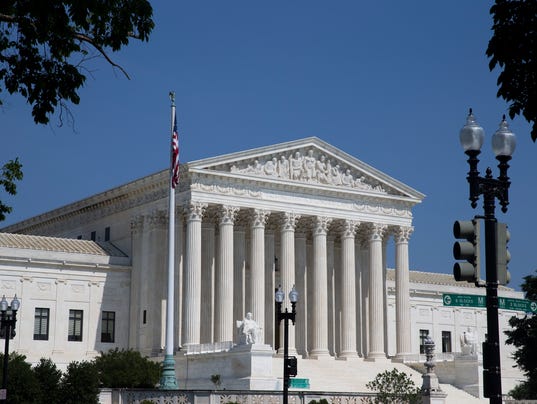
Supreme Court Deals Major Financial Blow to Nation’s Public Employee Unions

A deeply divided Supreme Court dealt a major blow to the nation’s public employee unions Wednesday that likely will result in a loss of money, members and political muscle.

Supreme Court labor unions


After three efforts in 2012, 2014 and 2016 fell short, the court’s conservative majority ruled 5-4 that unions cannot collect fees from non-members to help defray the costs of collective bargaining. Justice Samuel Alito wrote the decision, with dissents from Justices Elena Kagan and Sonia Sotomayor.

About 5 million workers could be affected by the decision overruling the court’s 1977 decision in Abood v. Detroit Board of Education — those who pay dues or “fair-share” fees to unions in 22 states where public employees can be forced to contribute. Workers in 28 states already cannot be forced to join or pay unions.

“We recognize that the loss of payments from nonmembers may cause unions to experience unpleasant transition costs in the short term and may require unions to make adjustments in order to attract and retain members,” Alito wrote. “But we must weigh these disadvantages against the considerable windfall that unions have received under Abood for the past 41 years.”

Kagan’s main dissent for the four liberal justices accused the court of “weaponizing the First Amendment in a way that unleashes judges, now and in the future, to intervene in economic and regulatory policy.”

“It wanted to pick the winning side in what should be — and until now has been — an energetic policy debate,” she wrote. “Today, that healthy — that democratic — debate ends. The majority has adjudged who should prevail.”

Justice Neil Gorsuch cast the deciding vote against what conservative opponents have labeled a form of compelled speech. The money helps labor unions maintain political power in some of the nation’s most populous states, including California, New York, Illinois, Pennsylvania and New Jersey.

Gorsuch, who had remained silent during oral argument in February, was the key because the court had deadlocked in a similar case two years ago following the death of Justice Antonin Scalia. The newest justice recently authored the court’s 5-4 ruling that denied workers the right to join together in class action lawsuits rather than submit employer-sponsored arbitration.

The ruling completed a 4-for-4 sweep for the Trump administration in which the Justice Department switched sides from the positions taken during the Obama administration. “The favorable Supreme Court decisions in all four cases reflect that we took the proper course of action,” Attorney General Jeff Sessions said.

The 2016 case challenged a powerful teachers union in California; the new one targeted state employees in Illinois. But the threatened impact was the same: elimination of fees paid by police, firefighters, teachers and other government workers who don’t join the unions that represent them.

The landmark ruling overrules the court’s own 41-year-old precedent, which said workers did not have to pay for unions’ political activity but could be required to contribute to other costs of representation, such as wage and benefit negotiations and grievance procedures.

The court’s decision frees those non-members from the fees, but unions also are braced to lose some dues-paying members who stand to save more under the new rule. That could force unions to raise dues on those who remain.

“It is shameful that the billionaire CEOs and corporate special interests behind this case have succeeded in manipulating the highest court in the land to do their bidding,” leaders of the nation’s four major public employee unions said in a statement. “This case was nothing more than a blatant political attack to further rig our economy and democracy against everyday Americans in favor of the wealthy and powerful.”

The case, Janus v. American Federation of State, County, and Municipal Employees, was backed by conservative groups that have tried for years to overturn the court’s 1977 decision upholding the fees for collective bargaining but not for political action.

“Today’s decision is a landmark victory for rights of public-sector employees coast-to-coast that will free millions of teachers, police officers, firefighters and other public employees from mandatory union payments,” said Mark Mix, president of the National Right to Work Legal Defense Foundation.

The court ruled 7-2, 5-4 and 4-4 on three similar cases in the past six years, eating away at the 1977 decision without overruling it entirely. In 2016, Scalia’s death a month after oral arguments denied conservatives their fifth vote.

The decision comes at a time when 61% of Americans approve labor unions — the highest rating in Gallup polls since 2003 — and teachers’ strikes have roiled states from West Virginia and Kentucky to Oklahoma, Colorado and Arizona.

“The fictional narrative of labor’s downfall is being upended by the reality working people are creating for ourselves,” AFL-CIO President Richard Trumka said recently. “No matter the outcome of this case, millions of workers will continue to stand together to build a stronger, fairer America.”

It remains unclear what impact the ruling will have on organized labor in general, which has suffered a 70-year decline in union membership. The nation’s roughly 15 million union members make up less than 11% of the workforce, a drop from 35% during World War II. The decline is magnified in the private sector, where only 6.5% of workers remain unionized.

In the public sector, more than one in three workers belong to a union, a percentage that has held relatively steady for decades. AFSCME, the National Education Association, Service Employees International Union and American Federation of Teachers now face a likely loss of members.

Some groups that have fought to end compulsory fees argue that unions can stave off membership declines by better representing workers. They cite data from states such as Indiana and Michigan after the enactment of right-to-work laws.

If you are seeking aggressive criminal representation by an experienced criminal defense attorney for your Denton County criminal case or arrest in Denton County, contact the offices of Tim Powers today. There is no charge or obligation for the initial consultation. 940.483.8000 Tim Powers is an attorney licensed to practice law by the Supreme Court of Texas. Nothing in this article is intended to be legal advice. For legal advice about any specific legal question you should directly consult an attorney. Criminal Defense Lawyers with Unparalleled Passion for Success Providing Quality Representation for your Denton, Lewisville, Flower Mound, Carrollton, Corinth, Highland Village Dallas, Plano, McKinney, Denton County, or Collin County criminal case

Supreme Court Cracks Down on Government snooping through cellphone location Records

Supreme Court cellphone privacy


The United States Supreme Court ruled Friday that the government cannot monitor people’s movements for weeks or months by tracking the location of their mobile phones without a warrant.

In a ruling that could have broad implications for privacy rights in the digital age, justices on both sides of the ideological spectrum said rapid advances in technology make decades-old rules on data privacy inadequate.

It was another in a series of digital privacy verdicts issued by the high court, following rulings in recent years that police cannot use  GPS equipment to track vehicles or search cellphones without a warrant.

Chief Justice John Roberts wrote the opinion and was joined by the court’s four liberal justices. He stressed that it was a narrow decision that does not question conventional surveillance techniques and tools, such as security cameras. But he said historical cell-site records raise even greater privacy concerns than GPS monitoring.

“Here the progress of science has afforded law enforcement a powerful new tool to carry out its important responsibilities,” Roberts said.

“While individuals regularly leave their vehicles, they compulsively carry cell phones with them all the time,” he said. “A cell phone faithfully follows its owner beyond public thoroughfares and into private residences, doctor’s offices, political headquarters, and other potentially revealing locales.”

The court’s other conservative justices vehemently disagreed, writing four times as much in their various dissents than Roberts did for the court’s majority.

Justice Anthony Kennedy said the government’s search of cellphone location records was permissible because they were held by the service provider, not the individual. “The court’s new and uncharted course will inhibit law enforcement.”

Justice Samuel Alito called it a “revolutionary” ruling that “guarantees a blizzard of litigation while threatening many legitimate and valuable investigative practices upon which law enforcement has rightfully come to rely.”

The latest case grew out of a series of armed robberies in Michigan and Ohio in 2010 and 2011. To prosecute its case against Timothy Carpenter, the government obtained cellphone records that revealed his approximate location over 127 days, placing him in proximity to the crimes.

The records were obtained under the Stored Communications Act of 1986, which allows phone companies to turn over records if the government has reasonable grounds to believe they will help a criminal investigation. A search warrant requires a tougher standard.

Lower courts upheld the search of cell tower records under the “third-party doctrine,” used in earlier Supreme Court cases to uphold government access to suspects’ bank records and phone numbers called from landlines. Consumers should know that wireless carriers can track them, the theory goes, so their locations are not private.

In 2016, police made some 125,000 requests for cellphone location data from Verizon and AT&T alone, often involving several suspects over periods of months. Courts routinely grant those requests under the 1986 law.

But privacy groups warned that extending the theory to cellphone location data could be a slippery slope leading to exposure of email and text messages, social media communications, Internet browsing histories and the so-called “Internet of Things,” from Siri to Fitbits.

Since 2001, the court has leaned toward protecting privacy from modern technology. That year, it ruled 5-4 that police needed a search warrant to use a thermal imaging device outside a private home to detect the heat required to grow marijuana inside.

Roberts referred to that case a decade later in identifying the clash between privacy and technology as “the real challenge for the next 50 years.”

“What does the Fourth Amendment mean when you can, through technology, literally see through walls with heat imaging?” he said.

If you are seeking aggressive criminal representation by an experienced criminal defense attorney for your Denton County criminal case or arrest in Denton County, contact the offices of Tim Powers today. There is no charge or obligation for the initial consultation. 940.483.8000 Tim Powers is an attorney licensed to practice law by the Supreme Court of Texas. Nothing in this article is intended to be legal advice. For legal advice about any specific legal question you should directly consult an attorney. Criminal Defense Lawyers with Unparalleled Passion for Success Providing Quality Representation for your Denton, Lewisville, Flower Mound, Carrollton, Corinth, Highland Village Dallas, Plano, McKinney, Denton County, or Collin County criminal case
DOJ Charges 11 Possible Caravan Members with Illegally Entering the U.S.

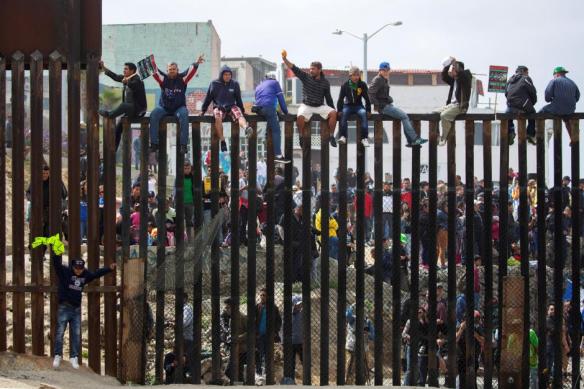
People in Mexico climb the border wall fence as a caravan of migrants and supporters reached the United States-Mexico border near San Diego, California

The Department of Justice has filed complaints against 11 individuals believed to be members of the Central American migrant caravan, accusing them of illegally entering the United States, a federal law enforcement official tells CNN.

After a month-long journey by bus, train and on foot, about 100 migrants arrived at the San Ysidro port of entry on the US-Mexico border on Sunday evening, preparing to claim asylum. About 20 to 30 migrants spent the night inside an immigration processing center in Tijuana, Mexico.

An organizer of the caravan vowed they would remain at the immigration processing center until “every last one” is admitted into the United States.

Two Salvadorans, six Hondurans, and three Guatemalans face charges, according to the official. Ten of the individuals face a misdemeanor charge for allegedly entering the US illegally. Another individual is alleged to have entered the US after having been previously deported, and faces a felony charge.

The official says the probable cause statement alleges many of those charged were seen in an area known as Goat Canyon, about 4 miles to the west of the San Ysidro Port of Entry, on the US side of the border. Others were seen on the US side of the border about 2 miles west of San Ysidro in an area known as “W-8.”

Supreme Court Ready to Rule on Travel Ban – The Benchmark for Future Presidential Power

Limiting the president’s purview over national security presents a slippery slope whose effects impact not only the present holder of that office but also future presidents’ ability to protect this country from perceived threats.

That, according to published reports, seemed to be the consensus after arguments before the Supreme Court last Wednesday on the constitutionality of President Trump’s travel ban affecting the Muslim-majority countries of Iran, Libya, Somalia, Syria and Yemen, as well as North Korea and Venezuela.

While reading into justices’ questions can often lead to erroneous conclusions, the scope of those queries would suggest the majority of the High Court will side with the Trump administration’s contention that this ban seeks to address a valid national security concern and so represents a reasonable exercise of executive power.

The court already showed its hand when justices allowed the travel ban to take effect temporarily in December by a 7-2 vote, with Justices Ruth Bader Ginsburg and Sonia Sotomayor opposed.

While the justices’ decision probably won’t be known until sometime in June, an affirmation of that ban would be a stunning reversal of lower court rulings, which stymied Trump’s efforts by determining it discriminated against people of a certain nationality or religion, since it primarily pertained to Muslim countries.

Those previous decisions also took into consideration the polarizing anti-Muslim rhetoric Trump espoused on the campaign trail when he was candidate Trump. While the High Court acknowledged Trump’s behavior, it appeared willing to separate the candidate from the office of president, which historically has exercised wide latitude on issues of national security.

Despite its ideological differences, the Supreme Court justices’ ability to dispassionately probe the merits of arguments for and against the ban — made by Solicitor General Noel Francisco and lawyer Neal Katyal respectively — present a stark contrast to the politically biased lens through which most debate occurs in Congress.

On Wednesday, Justice Anthony Kennedy, usually a swing vote on the court, sharply questioned Katyal and Francisco over concerns that individuals who felt discriminated against had a legal recourse to seek an exemption from the order, rather than any serious issue with the ban itself.

Francisco dismissed the contention that the countries included in this order amount to a Muslim ban, since the vast majority of Muslim-majority nations and their citizens retain the ability to visit the United States or legally establish residence here.

In effect, Trump and his national-security team simply went where the evidence took them in formulating this travel ban.

Trump, thanks to the rationality of the court, appears headed for a major legal victory that also protects the ability of his presidential successors to safeguard national security interests.

Bill Cosby is Back in Court. Will the #MeToo Movement be a Factor in the Outcome of his Second Trial?

Loretta Powers – Law Offices of Tim Powers and Legal Analyst for Fox News Radio

cosby

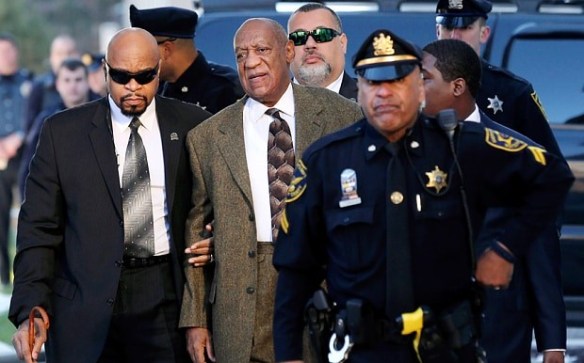
Cosby is accused of sexually assaulting over 50 women. Only one has come forward within the statute of limitations. Her case resulted in a trial last year. After a weeks of testimony and deliberations, a jury of his peers could not unanimously decide whether he was guilty beyond a reasonable doubt.

Now, we have a shift in culture. The #MeToo movement has encouraged women to speak up and #believewomen, but will the culture shift translate into a guilty verdict?

Not necessarily.

A culture shift does not change the fact that the prosecution must prove each element of the case beyond a reasonable doubt.

New evidence suggesting that Bill Cosby was not even in the state of Pennsylvania at the time of the alleged incident will be introduced. Receipts, telephone records, travel itineraries, and witness testimony will be presented to the jury. It is up to the jury to weigh and consider all evidence and determine whether Cosby is guilty beyond a reasonable doubt.

We will be following this case and others as news unfolds. Be sure to turn on notifications to follow our new criminal defense blog for national and local stories.

If you are seeking aggressive criminal representation by an experienced criminal defense attorney for your Denton County criminal case or arrest in Denton County, contact the offices of Tim Powers today. There is no charge or obligation for the initial consultation. 940.483.8000 Tim Powers is an attorney licensed to practice law by the Supreme Court of Texas. Nothing in this article is intended to be legal advice. For legal advice about any specific legal question you should directly consult an attorney. Criminal Defense Lawyers with Unparalleled Passion for Success Providing Quality Representation for your Denton, Lewisville, Flower Mound, Carrollton, Corinth, Highland Village Dallas, Plano, McKinney, Denton County, or Collin County criminal case

A Small Domestic Violence Charge? No Such Thing!

By Denton County, Texas Criminal Defense Lawyer Tim Powers

940.483.8000

http://www.timpowers.com

Domestic or family violence charges in Texas range from class c misdemeanors (the same level as a minor traffic offense), to felonies in other circumstances. The fact that some are charged as class c’s doesn’t diminish their importance and can act as a trap door.

A class c assault occurs where there is unwelcome offensive or provocative contact. The state does not need to prove the victim suffered any pain or discomfort whatsoever. They appear deceptively insignificant because they can be charged in smaller municipal courts and before justices of the peace where the rules are less formal and far fewer people have lawyers.

In class c domestic violence cases, the prosecution may try and add a small enhancement paragraph to the charge known as “an affirmative finding of family violence” under Texas Code of Criminal Procedure 42.013 and Texas Family Code 71.004. If the court enters this finding, even where the defendant gets deferred adjudication, then that finding can be used to enhance a future misdemeanor assaults all the way to a felony.

Most domestic violence cases in Texas are charged as the class a misdemeanor assault — where the state must prove some bodily injury (defined as any pain or discomfort). These cases can be very difficult for the state to prove. Often times the state will offer a class c deferred on the morning of trial if they feel badly about their case. Even in those instances, a person charged must be very careful because the affirmative finding may still be attached even though the charges reduced and getting a deferred adjudication

If you are charged with a class c assault where the alleged victim was a family member or someone in a dating relationship, you should strongly consider getting a lawyer regardless of how minor the situation or circumstances. Even a class c conviction can haunt you for the rest of your life.

*Tim Powers is an attorney licensed to practice law by the Supreme Court of Texas. Nothing in this article is intended to be legal advice. For legal advice about any specific legal question you should directly consult an attorney.

Testosterone Spill… Aisle 4

People say there are certain rivalries where you have to choose a side. You’re either a Beatles person or an Elvis person. You’re a Yankees fan or a Red Sox fan (well everyone really knows it’s the Red Sox) . You either love Mounds or Almond Joy. You can’t like both.

Add the latest one into the mix: You’re either a Jay Leno person or a Conan O’Brien person. Sure, there are Letterman people out there, and I know of at least one dedicated Colin Ferguson fan, but even if they’re not your favorite late-night personalities you still have to choose between the current Tonight Show host or the previous one.

Why? The battle is over over NBC’s late-night lineup.  O’Brien had his eye on the prestigious Tonight Show slot and — though I don’t know how he did it — he persuaded the brass at NBC to give it to him, ousting then-host Jay Leno. Since Leno did a good job of pulling in ratings, NBC was loathe to let him go, so they gave him his own hour-long, prime-time talk show, The Jay Leno Show, every day at 10 p.m., giving up on trying to schedule scripted series in that time slot.

It was a risky move for NBC, and, by all accounts, a failure. The Jay Leno Show turned out to be a horrible lead-in for the local news, which is reported to have angered NBC affiliates. Now, NBC had to scramble quickly to fix everything, because the last thing you want as a network television station is angry affiliates.   Did they really fix things or cause more problems ??

The Players

Jay Leno: He emerged from this situation a winner. Even though it was his show’s bad ratings that reportedly angered the affiliates, moving him back to 11:35 looks like a promotion. Saving his show made it look like NBC clearly favored  him over O’Brien.

Conan O’Brien: Not only would pushing Conan back a half-hour have looked  like a demotion, making him once again the second-fiddle to Leno, but having both Leno and O’Brien in Los Angeles means the two would still be competing for guests (if Leno’s half-hour format still has guests).  O’Brien today received $32 million to walk away and do nothing.  Not a bad result for losing a power struggle.

conan jay

Letterman: Really not a whole lot of adverse effect — he’s always had loyal fans, and he always will.

Jimmy Fallon: His Late Night comes on after Conan O’Brien, and with no other NBC late-night talk-show filming in New York, he gets his pick of guests doing the NYC circuit. I think it’s worked out well for him so far.

Carson Daly: He’s an ancillary winner.  Had the original (really stupid) NBC plan gone through Leno would have been on at 11:30, Conan at 12:00 followed by Fallon.   He would have likely been out on the street. Of course, not many people knew he had a show anyway.

John Stewart and Stephen Colbert: I think they look the best in all of this, since all of the coverage of the NBC mess has the press looking around for those doing the best jobs in the late-night game, and their names keep coming up. Some have gone so far as to say that their shows make the whole late-night chat format obsolete.

Out of Touch

Exactly one year after President Obama was inaugurated, Republican Scott Brown rocked the political establishment by defeating Democrat Martha Coakley to win the U.S. Senate seat held by for 46 years by Ted Kennedy, the so-called Liberal Lion. Channeling voter fury about the economy and dissatisfaction with President Obama’s domestic policies, Brown won decisively, by a margin of 52% to 47%.

Brown’s victory — in which independents flocked to the upstart candidate — had been expected, indeed feared, by the Democratic establishment, after weeks of increasingly dire poll numbers. The outcome immediately complicates Democrats’ push to pass their prized health-care bill, because Senate Democrats will lose their 60-vote filibuster-proof super-majority when Brown is seated in the next few weeks.

Just two months ago, it seemed inconceivable that Brown, a previously obscure state senator, could defeat Coakley, the state’s attorney general, who had been hand-picked by Massachusetts’ powerful Democratic establishment to run for the seat previously held by Kennedy, a beloved figure in the state. But Democratic power-players appear to have severely underestimated the groundswell of anger bubbling up from the electorate — anger that has manifested itself through the so-called Tea Party reaction to President Obama. For months, Democrats have dismissed that movement as a fringe publicity stunt. No more.

Wave of Seething Fury

Brown rode a wave of seething voter fury at Wall Street and the federal government — all against the backdrop of the inevitable letdown after Obama’s election. Across the country, voters blame the recession on Wall Street bigwigs and their pals in Washington, and recoil at each new disclosure of billion-dollar banker bonuses. Meanwhile, voters have grown increasingly annoyed by the sense that President Obama and the Democrats are cutting backroom deals in order to ram the health reform bill through Congress.

For weeks, frustrated reporters have tried in vain to pry an explanation from White House spokesman Robert Gibbs about why the Obama administration refuses to televise the ongoing health-care negotiations — after Obama campaigned by promising to put any such talks on C-SPAN. Now, the entire health-reform issue has gone nuclear as Democrats have lost their 60-vote lock on the Senate — the key to pushing through their agenda. Minutes after Brown’s victory, Sen. Jim Webb, a respected Senate Democrat, called on his party not to have any more votes on health care before Brown is seated.

A president’s party typically gives back seats during the two years into his first term — but the idea that Massachusetts, with its powerful Democratic machine, has just elected a Republican to replace Ted Kennedy is simply shocking. Further exacerbating matters is the fact that Coakley ran what is quickly being labeled one of the worst high-profile Senate campaigns in recent memory. One could sense that when she referred to Red Sox legend Curt Schilling as a “Yankees fan,” she had crossed the Rubicon — or the Charles, as it were — into political oblivion.

Operating in a Bubble

Abysmal campaign aside, Coakley ran smack into “the times,” as Machiavellli would have observed: the idea that sometimes the prevailing national situation may prove too powerful to overcome by sheer will alone. Thus, politicians must be as well-prepared as possible to take advantage of existing circumstances, and not make yawning gaffes like mistaking Curt Schilling’s baseball loyalty. Yes, the political environment was bad for Coakley, but her ineptitude as a candidate sealed her political doom.

Another way of saying this is that Coakley was overtaken by events on the ground, and what’s happening on the ground in America is bleak, even as Wall Street bankers continue to roll in the dough and Silicon Valley is revving up for a huge year. Brown’s victory illustrates just how out of touch the Obama administration and Democratic establishment is with the tenor of the American public. For months, Obama and his team have operated as if in a bubble — behaving as if they knew better than the public, and dismissing the increasingly strident complaints from the Democratic activists who elected him.

Most people agree about the need for Americans to have affordable health care. What Obama and the Democrats have failed to realize — amid the worst recession since the Great Depression — is the more immediate need that millions of Americans feel for a job. Even as the national unemployment rate has cruised past 10% — add 8% to account for the underemployed — the stock market has soared, increasing the perception that fat cats are getting rich while the American people suffer.

Brown’s victory is a body blow for President Obama’s ambitious domestic agenda. Health-care reform is sure to be circumscribed, carbon emissions cap-and-trade — already on the ropes — is likely dead. Forget about immigration reform. Obama had already alienated his left flank by seeming to cave on the public health option — which would have created a competitive national exchange — not to mention his apparent absence from the debate over key abortion language in the bill. In fact, Obama seemed aloof and removed throughout much of the health-care debate — odd considering it was his stated top national priority. While he was popular, Obama’s diffidence seemed like an asset — a cool detachment allowing him to address the country’s grave problems rationally. Now, Obama just looks arrogant and out of touch, and unless the Democratic party addresses that — and pronto — Republicans in Congress could be looking at their best year since the Gingrich Revolution of 1994.